
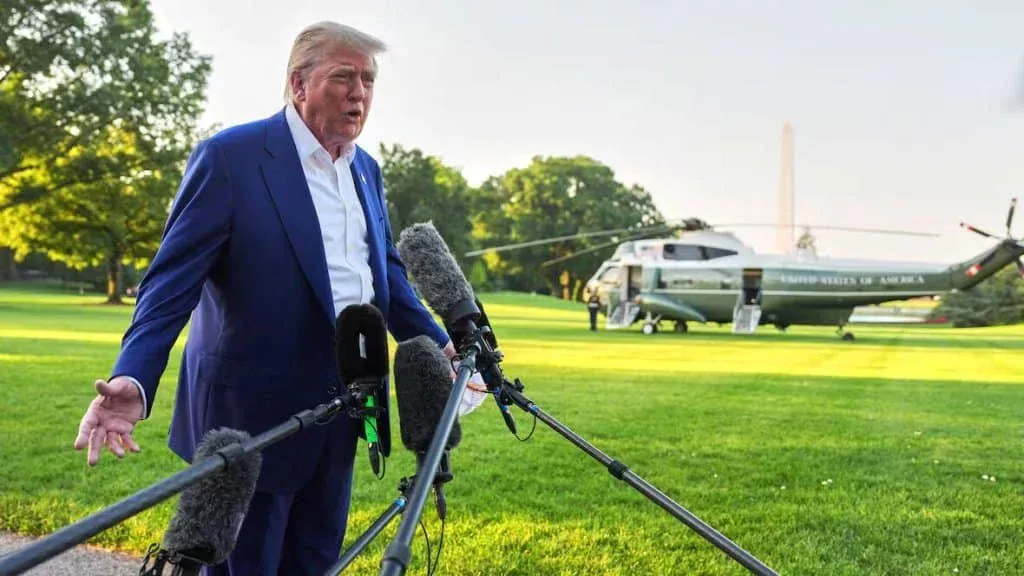
Trump Frustrated as Israel and Iran Swap Ceasefire Violation

Get an AI-generated summary of this article.

AI-generated article summary

Key Points:

  • President Trump announced a ceasefire between Israel and Iran on June 24, 2025, but both nations accused each other of violations within hours.
  • Iran denied launching missiles post-ceasefire, while Israel struck a radar near Tehran, claiming it responded to Iranian breaches.
  • Trump, visibly upset, urged Israel to halt retaliatory strikes, highlighting the ceasefire’s fragility.

On June 24, 2025, U.S. President Donald Trump declared a ceasefire between Israel and Iran, effective around 1:00 a.m. ET, via a Truth Social post:

“THE CEASEFIRE IS NOW IN EFFECT. PLEASE DO NOT VIOLATE IT!”

The announcement came after Iran’s retaliatory missile strike on the U.S. Al Udeid Air Base in Qatar, prompted by U.S. airstrikes on Iranian nuclear facilities on June 21, 2025. Within hours, Israel blamed Iran for violating the truce with missile launches, which Iranian media denied. Israel responded by striking a radar array near Tehran, per Israeli army radio GLZ, but held back from further attacks after Trump’s intervention, Netanyahu’s office confirmed on June 24, 2025.

Trump’s reaction to ceasefire violation from both sides
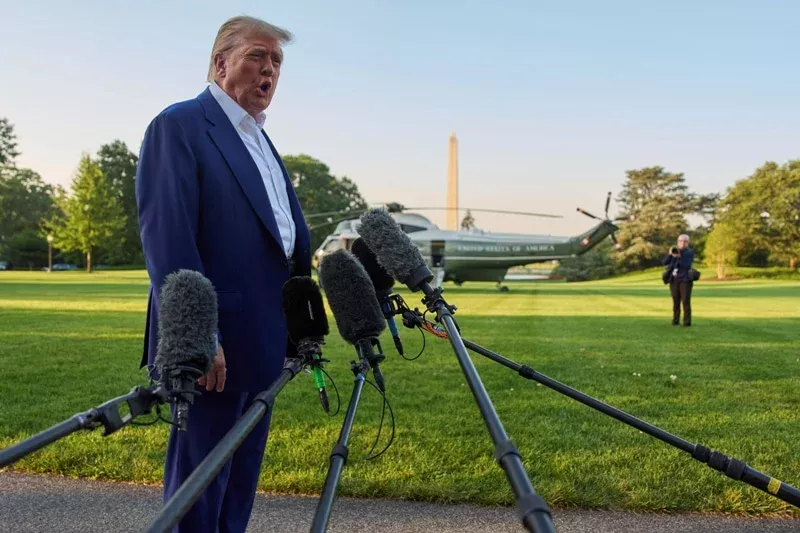
Trump warns both Israel and Iran over ceasefire violation.
President Trump speaks to reporters before boarding Marine One at the White House on June 24, 2025.

Trump expressed deep frustration with both nations, particularly Israel, for undermining the ceasefire he brokered. “I’m not happy with them. I’m not happy with Iran either, but I’m really unhappy if Israel is going out this morning,” he told reporters en route to a NATO summit in the Netherlands on June 24, 2025. In a fiery Truth Social post, he warned Israel:

“DO NOT DROP THOSE BOMBS. IF YOU DO IT IS A MAJOR VIOLATION. BRING YOUR PILOTS HOME, NOW!”

Trump’s direct call to Israeli Prime Minister Benjamin Netanyahu ensured Israel scaled back its response to a single radar strike, Axios reported on June 24, 2025. He later reassured that Israel would not escalate further, stating planes would return home with a friendly “Plane Wave” to Iran.

Ceasefire’s fragility and regional impact

The ceasefire is not looking strong, as both sides are blaming each other. Iranian news talked about explosions in Babol and Babolsar. Meanwhile, Israel said Iran launched missiles after the peace talks, but Iran denied this.

Despite the rough start, both nations signaled their commitment to peace, with Israel’s Defense Minister, Israel Katz, saying that Israel would comply unless Iran violated it and Iran’s President, Masoud Pezeshkian, imagining similar conditions. Qatar, a key mediator, was praised and thanked by Iran’s UN envoy for its diplomatic efforts. The conflict, dubbed the “12 Day War” by Trump, killed 606-974 in Iran and 28 in Israel, per various sources.

Nuclear dialogues and global reaction

The ceasefire has restored hopes for nuclear negotiations. IAEA Director General Rafael Grossi urged Iran to continue collaboration. Proposing a meeting with Foreign Minister Seyed Abbas Araghchi to resolve Iran’s nuclear debate. A U.S. intelligence report suggested U.S. strikes only set back Iran’s nuclear program by months.

Global leaders, including German Chancellor Olaf Scholz, welcomed the peace but urged attention. On X, AJEnglish noted the ceasefire held despite initial violations, reflecting cautious optimism.


About Writer

More News

Trump Criticizes Pope Leo Over Iran Peace Appeal

US President Donald Trump has sparked fresh controversy after publicly criticizing Pope Leo following the pontiff’s appeal for peace amid the ongoing Iran conflict. The clash highlights growing tension between political leadership in Washington and the Vatican’s moral stance on war and global diplomacy. The dispute began after Pope Leo made a strong statement urging world leaders to avoid further escalation and prioritize peace. Without directly naming Trump, the pope warned against using power or religion to justify war. His remarks were widely interpreted as criticism of US policy. Trump responded on social media, calling the pope weak on crime and...

Why Trump Is Blockading a Strait Iran Is Already Blocking

After peace talks in Islamabad collapsed, President Trump announced the US Navy would “immediately” begin blockading the Strait of Hormuz. There is one obvious question: why would the US blockade a waterway it has been demanding Iran reopen? The Strait Is Not Fully Closed Iran has not technically sealed the Strait completely. It has been allowing some vessels through in exchange for tolls of up to $2 million per ship. Crucially, Iran has kept its own oil flowing throughout the war, exporting an average of 1.85 million barrels per day through March, slightly above pre-war levels, according to data firm Kpler. The...

Islamabad Talks | US and Iran Fail to Reach a Deal After 21 Hours

The most significant US-Iran diplomatic meeting since the 1979 Islamic Revolution ended without a deal on Sunday. After 21 hours of face-to-face talks in Islamabad. Both sides left the table blaming each other. The ceasefire that expires April 22 now hangs by a thread. What Happened in the Room The talks were the first direct US-Iranian engagement since the 2015 top-level engagement. Vice President JD Vance led the American delegation alongside Steve Witkoff and Jared Kushner. Iran was represented by Parliament Speaker Mohammad Bagher Ghalibaf and Foreign Minister Abbas Araghchi. Al Jazeera's correspondent in Islamabad described the outcome as “neither a breakthrough...

US Iran Talks Could Reshape Middle East Power Balance

A Rare Diplomatic Moment Between US and Iran The United States and Iran have entered a critical phase of diplomacy as both countries begin direct negotiations in Islamabad, Pakistan. These US Iran talks come after weeks of rising tensions that brought both nations close to conflict. While a temporary ceasefire is currently in place, the situation remains fragile. This meeting is significant because it represents one of the few direct engagements between Washington and Tehran in recent history. For decades, relations between the US and Iran have been shaped by mistrust and political conflict. The decision to begin talks shows that...

Five points to know about Iran US Talks in Islamabad

Pakistan is hosting one of the most consequential diplomatic meetings in decades. The United States and Iran are holding their highest level talks in years in Islamabad, in a Pakistan brokered bid to turn a fragile two week ceasefire into a lasting end to a war that has roiled global energy markets. The War That Made These Talks Necessary On February 28, the US and Israel launched deadly coordinated strikes that killed Supreme Leader Ali Khamenei and struck Iran's military and nuclear infrastructure. More than 3,000 people were killed in Iran in five weeks, according to Iranian media and...

Latest Articles