Why Trump Is Blockading a Strait Iran Is Already Blocking

Get an AI-generated summary of this article.

AI-generated article summary

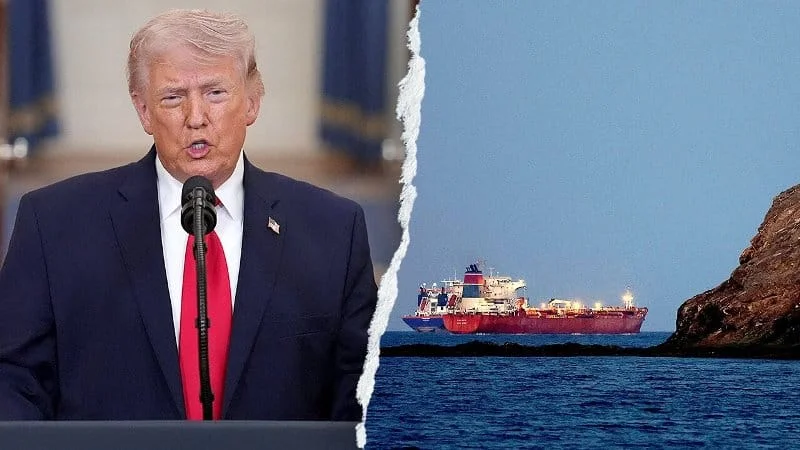
After peace talks in Islamabad collapsed, President Trump announced the US Navy would “immediately” begin blockading the Strait of Hormuz. There is one obvious question: why would the US blockade a waterway it has been demanding Iran reopen?

The Strait Is Not Fully Closed
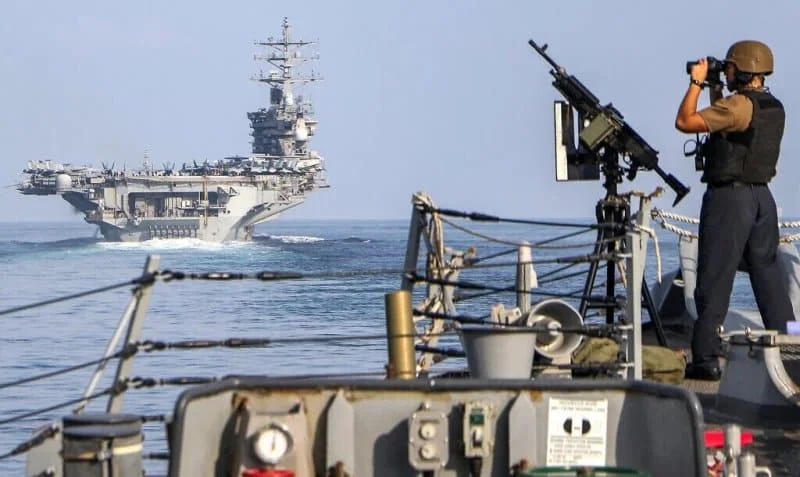
Trump said US Navy would “immediately” begin blockading the Strait of Hormuz.
The US Navy’s aircraft carrier USS Dwight D. Eisenhower (CVN 69) (IKE) transits the Strait of Hormuz on November 26, 2023

Iran has not technically sealed the Strait completely. It has been allowing some vessels through in exchange for tolls of up to $2 million per ship. Crucially, Iran has kept its own oil flowing throughout the war, exporting an average of 1.85 million barrels per day through March, slightly above pre-war levels, according to data firm Kpler.

The US Navy had been allowing Iranian tankers to pass because any oil leaving the region helps keep global prices in check. Washington even granted Iran a temporary one-month sanctions waiver in March, freeing roughly 140 million barrels worth of oil for sale to Western buyers instead of exclusively to China, Iran’s largest customer.

By interdicting ships that have paid Iran’s toll, Trump cuts off a key source of financing for Iran’s military operations. The risk is a sharp spike in global oil prices, which have already risen since the war began. The administration has tried multiple levers to manage energy costs: coordinating emergency reserve releases globally and desanctioning Russian oil last month.

The blockade represents a shift from damage control to maximum pressure, accepting the risk of higher oil prices to force Iran back to the negotiating table before the ceasefire expires on April 22.

Iran’s Revolutionary Guard said the Strait of Hormuz remains open for civilian vessels, but warned that military ships “will be dealt with severely.” Tehran also said it will not bow to threats, setting up a confrontation between the two navies in one of the world’s most critical energy chokepoints.

About Writer

More News

Trump and Xi Meeting Ends with High Stakes, Few Deals, and a Taiwan Warning

US President Donald Trump arrived in Beijing on May 13 for the most consequential American presidential visit to China in nearly a decade, touching down at Beijing Capital International Airport to a ceremony featuring an honor guard and crowds of children waving Chinese and American flags. The two day summit opened with warm words and a careful agenda, but by the time both sides released their readouts of the first day of talks, it became clear that Washington and Beijing were still telling very different stories about what had happened in the room. How the Summit Opened Trump was greeted by...

Two Months of Iran War | Who Is Winning, Who Is Losing, and Who Is Still Deciding?

Two Months Into the Iran War When Donald Trump launched the war on Iran on February 28, he told the world it would be quick, decisive, and worth it. Ten days in, he said the United States had already won the war “in many ways.” (function(w,q){w=w||;w.push()})(window,"_mgq"); Two months later, a definitive end to the conflict is nowhere in sight. A ceasefire is in place but fragile. Diplomacy keeps stalling. And almost every country pulled into this war willingly or not is paying a price it did not budget for. (function(v,d,o,ai){ai=d.createElement('script');ai.defer=true;ai.async=true;ai.src=v.location.protocol+o;d.head.appendChild(ai);})(window, document, '//a.vdo.ai/core/v-livenewsof/vdo.ai.js'); “There aren’t any real winners from the war, but there are some...

Trump Criticizes Pope Leo Over Iran Peace Appeal

(function(w,q){w=w||;w.push()})(window,"_mgq"); US President Donald Trump has sparked fresh controversy after publicly criticizing Pope Leo following the pontiff’s appeal for peace amid the ongoing Iran conflict. The clash highlights growing tension between political leadership in Washington and the Vatican’s moral stance on war and global diplomacy. The dispute began after Pope Leo made a strong statement urging world leaders to avoid further escalation and prioritize peace. Without directly naming Trump, the pope warned against using power or religion to justify war. His remarks were widely interpreted as criticism of US policy. Trump responded on social media, calling the pope weak on crime and...

Islamabad Talks | US and Iran Fail to Reach a Deal After 21 Hours

The most significant US-Iran diplomatic meeting since the 1979 Islamic Revolution ended without a deal on Sunday. After 21 hours of face-to-face talks in Islamabad. Both sides left the table blaming each other. The ceasefire that expires April 22 now hangs by a thread. (function(w,q){w=w||;w.push()})(window,"_mgq"); What Happened in the Room The talks were the first direct US-Iranian engagement since the 2015 top-level engagement. Vice President JD Vance led the American delegation alongside Steve Witkoff and Jared Kushner. Iran was represented by Parliament Speaker Mohammad Bagher Ghalibaf and Foreign Minister Abbas Araghchi. Al Jazeera's correspondent in Islamabad described the outcome as “neither a breakthrough...

US Iran Talks Could Reshape Middle East Power Balance

A Rare Diplomatic Moment Between US and Iran The United States and Iran have entered a critical phase of diplomacy as both countries begin direct negotiations in Islamabad, Pakistan. These US Iran talks come after weeks of rising tensions that brought both nations close to conflict. While a temporary ceasefire is currently in place, the situation remains fragile. (function(w,q){w=w||;w.push()})(window,"_mgq"); This meeting is significant because it represents one of the few direct engagements between Washington and Tehran in recent history. For decades, relations between the US and Iran have been shaped by mistrust and political conflict. The decision to begin talks shows that...

Latest Articles