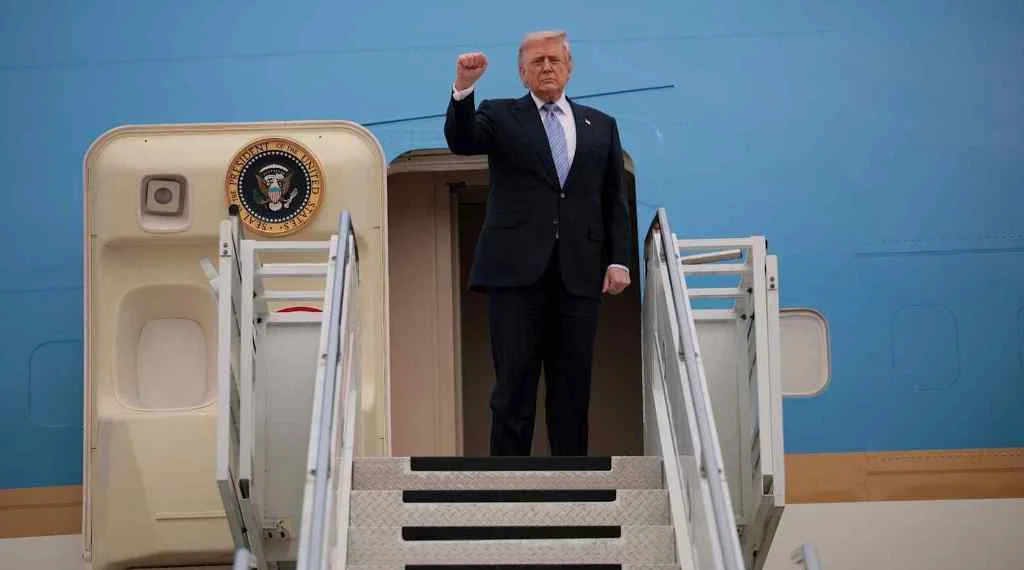
US President Donald Trump arrived in Beijing on May 13 for the most consequential American presidential visit to China in nearly a decade, touching down at Beijing Capital International Airport to a ceremony featuring an honor guard and crowds of children waving Chinese and American flags. The two day summit opened with warm words and a careful agenda, but by the time both sides released their readouts of the first day of talks, it became clear that Washington and Beijing were still telling very different stories about what had happened in the room.
How the Summit Opened
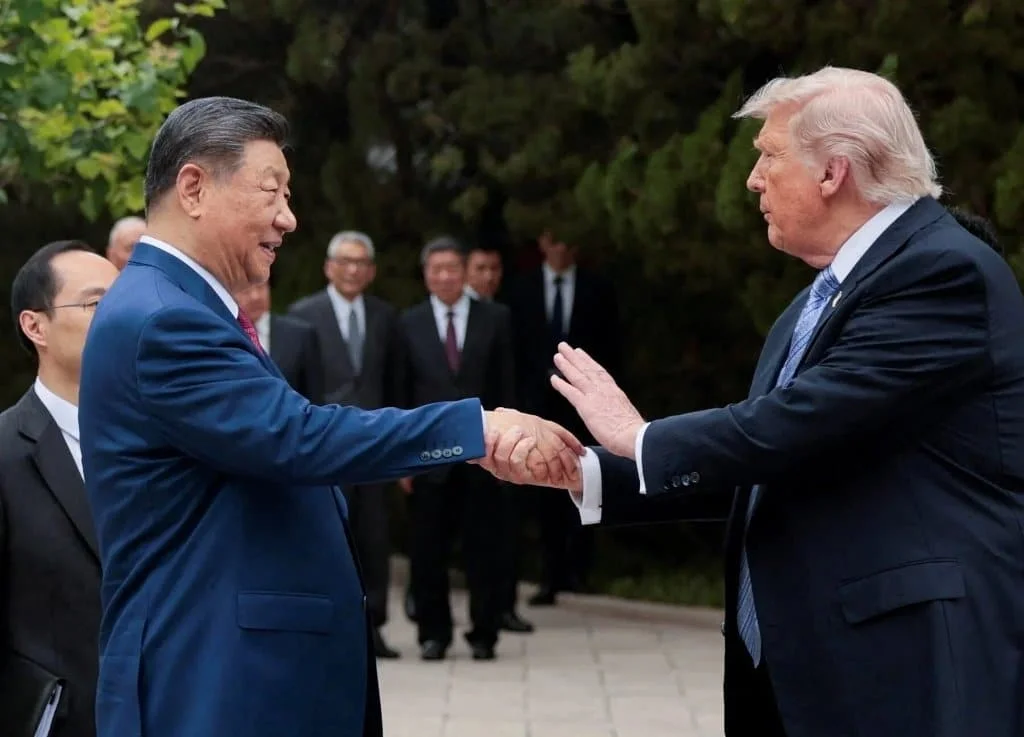
Trump was greeted by Chinese Vice President Han Zheng on the tarmac before meeting President Xi Jinping the following day at the Great Hall of the People in Beijing. The formal welcome ceremony set a deliberately optimistic tone, with Trump declaring that the relationship between China and the United States is going to be better than ever before.
Xi opened the bilateral session by saying China’s and the United States’ common interests outweigh their differences and that cooperation benefits both sides while confrontation harms both. He invited Trump to frame the relationship not as two rivals competing for global dominance but as two powers capable of what he described as mutual benefit and stability. Trump responded by praising Xi’s leadership as great and telling reporters at the venue that he sees a fantastic future together for the two countries.
Business leaders including Tesla’s Elon Musk, Apple’s Tim Cook, BlackRock’s Larry Fink, Nvidia’s Jensen Huang and Boeing CEO Kelly Ortberg accompanied Trump on the trip, joining portions of the bilateral meeting and signaling that the White House was hoping to produce concrete commercial commitments from Beijing.
What Was Actually Agreed?
The most tangible outcome of the first day was Xi’s agreement to purchase 200 Boeing aircraft, a headline announcement that Trump welcomed as a major win. China also restored beef trade with the United States by issuing new import licenses for hundreds of American producers, and both sides discussed increasing Chinese purchases of American agricultural products more broadly including soybeans, which China had refused to buy from US suppliers during the 2025 trade war.
On the Iran conflict, which has dominated the global economic landscape since February 28, both leaders agreed that the Strait of Hormuz must remain open to ensure the free flow of energy, and that Iran should not be permitted to obtain a nuclear weapon. Xi expressed interest in buying more US oil as a way to reduce China’s dependence on supplies routed through the Strait of Hormuz, a gesture that carried practical and diplomatic significance given that China is currently Iran’s largest oil buyer.
Both sides also discussed addressing the flow of fentanyl precursors from Chinese manufacturers into the United States, a subject that has featured in US China talks for several years with limited results. The White House readout described it as a joint priority going forward.
The Taiwan Dispute That Never Made the US Readout
The most striking gap between the two official accounts of the summit involves Taiwan. The White House readout of the bilateral meeting made no mention of the island at all, focusing entirely on trade and economic cooperation. China’s version of events was starkly different.
According to Xinhua, China’s state news agency, Xi told Trump directly that the Taiwan question is the most important issue in China and United States relations. He warned that if it is not handled properly, the two countries will have clashes and even conflicts, putting the entire relationship in great jeopardy. Chinese foreign ministry spokesperson Mao Ning confirmed these remarks publicly after the meeting.
Secretary of State Marco Rubio told reporters that US policy on Taiwan remains unchanged and that the topic did not feature prominently in the discussions. Treasury Secretary Scott Bessent told CNBC that Trump understands the sensitivities around the issue and will address it in the coming days. Neither response clarified what was actually said inside the room on the subject.
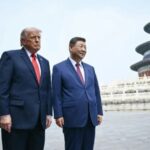
At the Temple of Heaven, where Trump and Xi visited following the bilateral talks in a carefully choreographed moment, a reporter asked Trump directly about Taiwan. Trump did not answer the question, praised China, and moved on. In Taipei, officials monitored every element of the summit closely, watching for any shift in language that might signal a weakening of Washington’s longstanding commitment to the island’s security.
What Did Not Happen
Analysts who had expected the summit to produce major announcements on rare earths, artificial intelligence governance or a formal extension of the trade truce were left largely without the big deal they had anticipated. No new framework for AI regulation was announced. No rare earths agreement was signed. No specific tariff changes were confirmed. The trade relationship between the two countries remains in a holding pattern that both sides describe differently but neither is eager to disrupt.
On Iran, China reiterated that it supports a diplomatic resolution but stopped well short of committing to use its leverage as Tehran’s top trade partner to push Iran toward a specific outcome. Analysts at the Center for Strategic and International Studies noted that while Xi’s presence in the conversation gives the US more diplomatic surface area, Beijing is unlikely to push Iran harder than its own strategic interests require.