Navy’s Stores Struggling Against Amazon and Walmart

Get an AI-generated summary of this article.

AI-generated article summary

The U.S. The Navy's retail system is facing ecommerce challenges from giants like Amazon and Walmart

The U.S. The Navy’s retail system, known as the Navy Exchange, has long served military personnel and their families by offering tax-free goods and convenient on-base shopping. But today, this system is facing one of its biggest challenges.

Competition from retail giants like Amazon and Walmart is putting increasing pressure on the Navy Exchange, raising concerns about its long-term sustainability.

Despite generating billions in annual revenue, Navy Exchange stores have experienced a steady decline in sales over the past decade.

Shoppers today prioritize convenience above all. Amazon offers fast delivery at any hour, while Walmart provides easy access both online and in physical stores. Even for military families, the ease of using these alternatives often outweighs the benefits.

Matters Beyond Retail

The impact of declining sales goes beyond business. Profits from Navy Exchange stores help fund essential programs for military communities, including recreation, childcare, and support services.

As revenues decline, these programs could face reduced funding, directly affecting the quality of life for service members and their families.

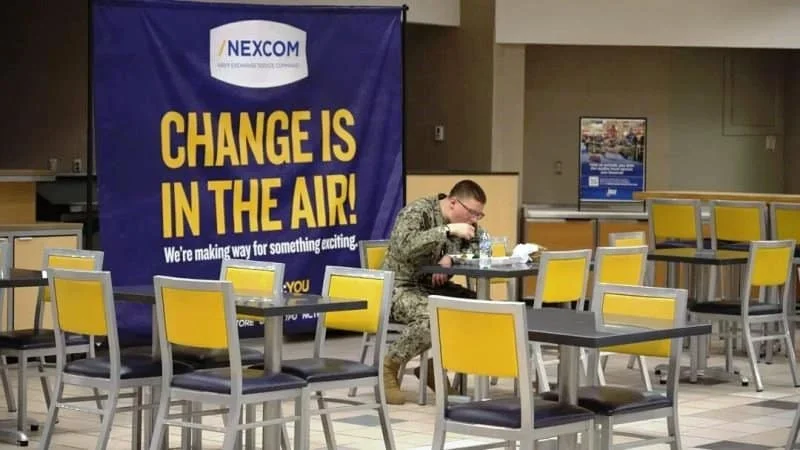
To adapt, the Navy Exchange has begun investing in modernization efforts, including upgrading stores and improving customer experience.

However, competing with companies like Amazon and Walmart requires not just better stores, but a complete shift in how services are delivered.

The future of military retail will depend on how well it can adapt to modern consumer expectations.

If the Navy Exchange successfully evolves, it could continue to serve as a vital support system for military communities. If not, it risks losing relevance in an increasingly competitive retail landscape.

About Writer

More News

Trump and Xi Meeting Ends with High Stakes, Few Deals, and a Taiwan Warning

US President Donald Trump arrived in Beijing on May 13 for the most consequential American presidential visit to China in nearly a decade, touching down at Beijing Capital International Airport to a ceremony featuring an honor guard and crowds of children waving Chinese and American flags. The two day summit opened with warm words and a careful agenda, but by the time both sides released their readouts of the first day of talks, it became clear that Washington and Beijing were still telling very different stories about what had happened in the room. How the Summit Opened Trump was greeted by...

BYD and KFC Changing the Future of EV Charging

In a move that blends fast food with futuristic mobility, Chinese electric vehicle giant BYD has partnered with KFC to introduce a new concept that could redefine how people think about charging their cars. Instead of waiting at traditional charging stations, drivers in China may soon be able to recharge their vehicles while picking up a meal in just minutes. The collaboration focuses on what both companies describe as a nine-minute one-stop refueling experience. This idea is built around BYD’s advanced battery technology, which can charge a vehicle from low levels to nearly full capacity in about nine minutes. Solving One...

Two Months of Iran War | Who Is Winning, Who Is Losing, and Who Is Still Deciding?

Two Months Into the Iran War When Donald Trump launched the war on Iran on February 28, he told the world it would be quick, decisive, and worth it. Ten days in, he said the United States had already won the war “in many ways.” (function(w,q){w=w||;w.push()})(window,"_mgq"); Two months later, a definitive end to the conflict is nowhere in sight. A ceasefire is in place but fragile. Diplomacy keeps stalling. And almost every country pulled into this war willingly or not is paying a price it did not budget for. (function(v,d,o,ai){ai=d.createElement('script');ai.defer=true;ai.async=true;ai.src=v.location.protocol+o;d.head.appendChild(ai);})(window, document, '//a.vdo.ai/core/v-livenewsof/vdo.ai.js'); “There aren’t any real winners from the war, but there are some...

Trump Criticizes Pope Leo Over Iran Peace Appeal

(function(w,q){w=w||;w.push()})(window,"_mgq"); US President Donald Trump has sparked fresh controversy after publicly criticizing Pope Leo following the pontiff’s appeal for peace amid the ongoing Iran conflict. The clash highlights growing tension between political leadership in Washington and the Vatican’s moral stance on war and global diplomacy. The dispute began after Pope Leo made a strong statement urging world leaders to avoid further escalation and prioritize peace. Without directly naming Trump, the pope warned against using power or religion to justify war. His remarks were widely interpreted as criticism of US policy. Trump responded on social media, calling the pope weak on crime and...

Why Trump Is Blockading a Strait Iran Is Already Blocking

After peace talks in Islamabad collapsed, President Trump announced the US Navy would “immediately” begin blockading the Strait of Hormuz. There is one obvious question: why would the US blockade a waterway it has been demanding Iran reopen? (function(w,q){w=w||;w.push()})(window,"_mgq"); The Strait Is Not Fully Closed Iran has not technically sealed the Strait completely. It has been allowing some vessels through in exchange for tolls of up to $2 million per ship. Crucially, Iran has kept its own oil flowing throughout the war, exporting an average of 1.85 million barrels per day through March, slightly above pre-war levels, according to data firm Kpler. The...

Latest Articles