
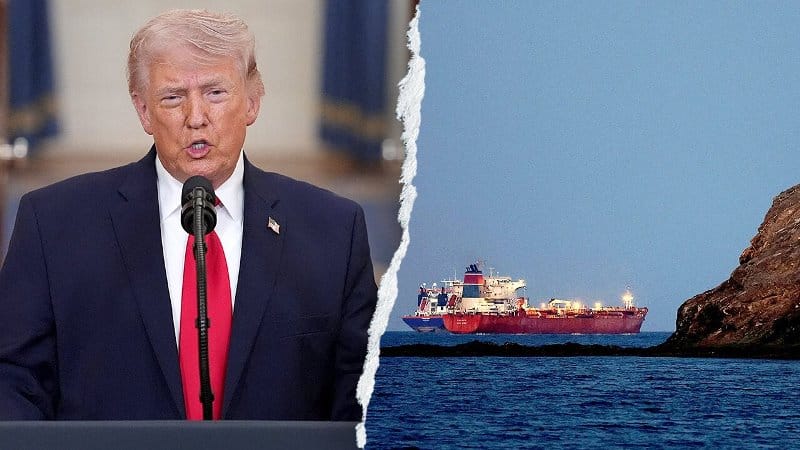
Why Trump Is Blockading a Strait Iran Is Already Blocking

Get an AI-generated summary of this article.

AI-generated article summary

After peace talks in Islamabad collapsed, President Trump announced the US Navy would “immediately” begin blockading the Strait of Hormuz. There is one obvious question: why would the US blockade a waterway it has been demanding Iran reopen?

The Strait Is Not Fully Closed
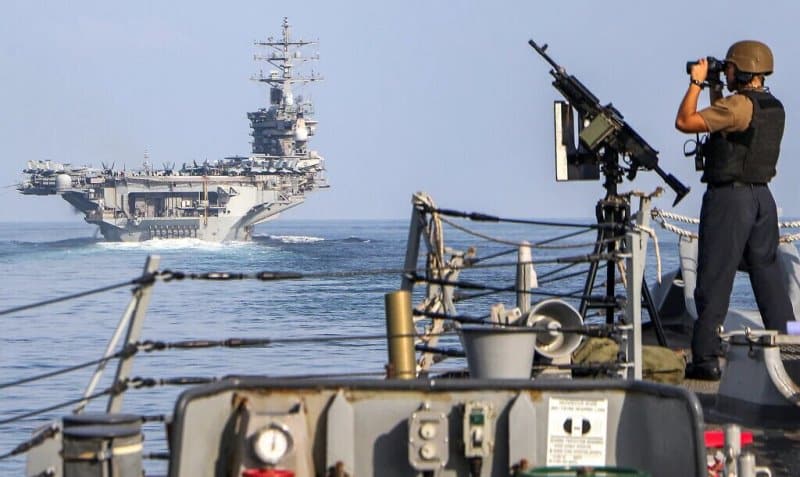
Trump said US Navy would “immediately” begin blockading the Strait of Hormuz.
The US Navy’s aircraft carrier USS Dwight D. Eisenhower (CVN 69) (IKE) transits the Strait of Hormuz on November 26, 2023

Iran has not technically sealed the Strait completely. It has been allowing some vessels through in exchange for tolls of up to $2 million per ship. Crucially, Iran has kept its own oil flowing throughout the war, exporting an average of 1.85 million barrels per day through March, slightly above pre-war levels, according to data firm Kpler.

The US Navy had been allowing Iranian tankers to pass because any oil leaving the region helps keep global prices in check. Washington even granted Iran a temporary one-month sanctions waiver in March, freeing roughly 140 million barrels worth of oil for sale to Western buyers instead of exclusively to China, Iran’s largest customer.

By interdicting ships that have paid Iran’s toll, Trump cuts off a key source of financing for Iran’s military operations. The risk is a sharp spike in global oil prices, which have already risen since the war began. The administration has tried multiple levers to manage energy costs: coordinating emergency reserve releases globally and desanctioning Russian oil last month.

The blockade represents a shift from damage control to maximum pressure, accepting the risk of higher oil prices to force Iran back to the negotiating table before the ceasefire expires on April 22.

Iran’s Revolutionary Guard said the Strait of Hormuz remains open for civilian vessels, but warned that military ships “will be dealt with severely.” Tehran also said it will not bow to threats, setting up a confrontation between the two navies in one of the world’s most critical energy chokepoints.

About Writer

Nathan Enzo
Nathan Enzo
A professional writer since 2014 with a Bachelor of Arts in Journalism and Mass Communication, Nathan Enzo ran the creative writing department for the major News Channels until 2018. He then worked as a Senior content writer with LiveNewsof.com, including national newspapers, magazines, and online work. He specializes in media studies and social communications.

More News

Islamabad Talks | US and Iran Fail to Reach a Deal After 21 Hours

The most significant US-Iran diplomatic meeting since the 1979 Islamic Revolution ended without a deal on Sunday. After 21 hours of face-to-face talks in Islamabad. Both sides left the table blaming each other. The ceasefire that expires April 22 now hangs by a thread. What Happened in the Room The talks were the first direct US-Iranian engagement since the 2015 top-level engagement. Vice President JD Vance led the American delegation alongside Steve Witkoff and Jared Kushner. Iran was represented by Parliament Speaker Mohammad Bagher Ghalibaf and Foreign Minister Abbas Araghchi. Al Jazeera's correspondent in Islamabad described the outcome as “neither a breakthrough...

US Iran Talks Could Reshape Middle East Power Balance

A Rare Diplomatic Moment Between US and Iran The United States and Iran have entered a critical phase of diplomacy as both countries begin direct negotiations in Islamabad, Pakistan. These US Iran talks come after weeks of rising tensions that brought both nations close to conflict. While a temporary ceasefire is currently in place, the situation remains fragile. This meeting is significant because it represents one of the few direct engagements between Washington and Tehran in recent history. For decades, relations between the US and Iran have been shaped by mistrust and political conflict. The decision to begin talks shows that...

Five points to know about Iran US Talks in Islamabad

Pakistan is hosting one of the most consequential diplomatic meetings in decades. The United States and Iran are holding their highest level talks in years in Islamabad, in a Pakistan brokered bid to turn a fragile two week ceasefire into a lasting end to a war that has roiled global energy markets. The War That Made These Talks Necessary On February 28, the US and Israel launched deadly coordinated strikes that killed Supreme Leader Ali Khamenei and struck Iran's military and nuclear infrastructure. More than 3,000 people were killed in Iran in five weeks, according to Iranian media and...

Gulf States Fear Instability Despite US Iran Ceasefire

The Strait of Hormuz crisis continues to worry Gulf countries even after a temporary US Iran ceasefire. While leaders announced a pause in fighting, the situation on the ground tells a different story. Oil routes remain uncertain, and regional trust is still weak. The Strait of Hormuz is one of the world’s most important oil shipping routes. Nearly 20% of global oil supply passes through it. Any disruption here quickly affects energy prices, global trade, and economic stability. Gulf states like Saudi Arabia, UAE, and Qatar depend heavily on stable oil exports. Right now, they fear the ceasefire may give Iran...

Trump and Iran Reach Two Week Ceasefire. Strait of Hormuz to Reopen

Just hours before his own deadline, US President Donald Trump announced a two week ceasefire with Iran on Tuesday evening. The deal came after weeks of threats, failed proposals, and intense diplomacy led by Pakistan. Trump agreed to suspend all bombing and attacks on Iran for two weeks on the condition that Iran reopens the Strait of Hormuz completely, immediately, and safely. How the deal happens sudden last night? The breakthrough happened fast. Earlier in the day, Trump had warned the world in a Truth Social post that “a whole civilization will die tonight, never to be brought back again” if...

Latest Articles