
U.S. Soldiers Sustain Brain Injuries in Iranian Strikes, Pentagon Confirms

Get an AI-generated summary of this article.

AI-generated article summary

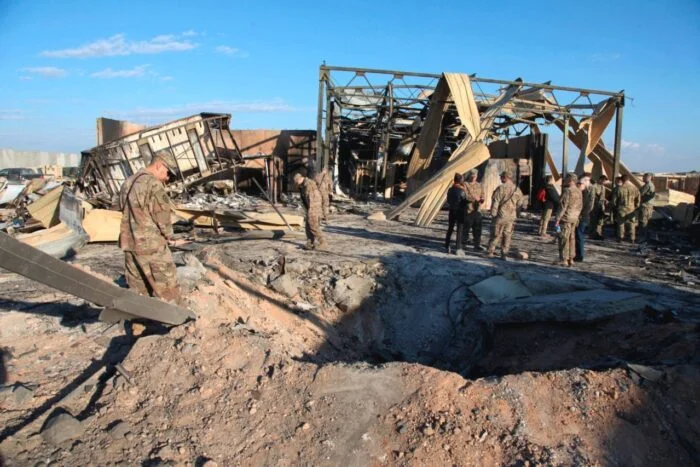
The Pentagon on Tuesday stated that 50 members of the U.S. military received brain injuries from Iranian Airstrikes on Al Asad Air Base in Iraq this month; around 16 were reported last week.

The office said that out of 50 affected, 31 were treated in Iraq and cleared to join duty, “Including 15 of the additional service members,” said a Pentagon spokesman, Lt. Col. Thomas Campbell, in a statement Tuesday.

“As stated before, this is a snapshot in time, and numbers can change,” said Colonel Campbell to media reporters, and added, “We will keep providing updates as they become available.”
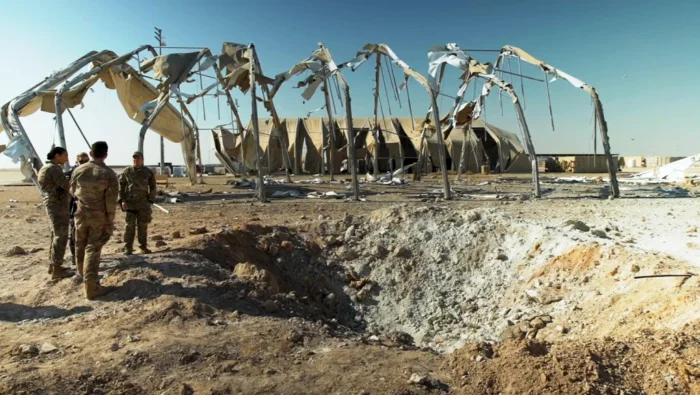
Pentagon confirms that 50 US soldiers shown signs of serious brain injuries after Iranian missile attacks
U.S troops standing at one of the bases targeted by Iranian missile strikes

The Defense Department announced on Friday that 34 U.S. service members had suffered traumatic brain injuries as a result of the January 8 attacks from Iran’s military.

In the hours after the strikes, President Trump said no Americans had been hurt.

According to the Pentagon’s statement Tuesday, the number of U.S. troops taken to Germany for further evaluation and treatment has also increased to 18 from 17. Colonel Campbell confirmed that one of the service members who was sent to Kuwait has since returned to duty.

Brain injuries are not always suddenly apparent, officials said, citing that delays in confirming the injuries can also be caused by the time it takes for information to work its way to leaders in Washington.
The increasing number of injuries undermines President Donald Trump’s initial statements hours after the airstrikes, in which he didn’t announce any casualties.
“I am pleased to inform you the American people should be extremely grateful and happy,” Trump said during a speech on January 9, adding that “No Americans were harmed in last night’s attack by the Iranian regime.”

After the Pentagon reported that American troops were reflecting signs of concussions following Iranian missile strikes, Mr Trump on January 22 marginalized the symptoms as “not very serious,” drawing criticism from veterans’ groups.

“I heard they had headaches,” Trump spoke at a news conference in Davos, Switzerland. “No, I do not consider them very lethal injuries compared to other injuries that I’ve seen.”

The White House didn’t directly respond to a request for comment Tuesday night.

Iran launched at least a dozen missiles during the attack on two of the bases in Iraq housing the U.S. troops. The Islamic State did it in retaliation for the killing of its top general, Qasem Soleimani, who died in an American drone strike in Baghdad on January 3.


 

About Writer

Nathan Enzo
Nathan Enzo
A professional writer since 2014 with a Bachelor of Arts in Journalism and Mass Communication, Nathan Enzo ran the creative writing department for the major News Channels until 2018. He then worked as a Senior content writer with LiveNewsof.com, including national newspapers, magazines, and online work. He specializes in media studies and social communications.

More News

Trump Criticizes Pope Leo Over Iran Peace Appeal

US President Donald Trump has sparked fresh controversy after publicly criticizing Pope Leo following the pontiff’s appeal for peace amid the ongoing Iran conflict. The clash highlights growing tension between political leadership in Washington and the Vatican’s moral stance on war and global diplomacy. The dispute began after Pope Leo made a strong statement urging world leaders to avoid further escalation and prioritize peace. Without directly naming Trump, the pope warned against using power or religion to justify war. His remarks were widely interpreted as criticism of US policy. Trump responded on social media, calling the pope weak on crime and...

Why Trump Is Blockading a Strait Iran Is Already Blocking

After peace talks in Islamabad collapsed, President Trump announced the US Navy would “immediately” begin blockading the Strait of Hormuz. There is one obvious question: why would the US blockade a waterway it has been demanding Iran reopen? The Strait Is Not Fully Closed Iran has not technically sealed the Strait completely. It has been allowing some vessels through in exchange for tolls of up to $2 million per ship. Crucially, Iran has kept its own oil flowing throughout the war, exporting an average of 1.85 million barrels per day through March, slightly above pre-war levels, according to data firm Kpler. The...

Islamabad Talks | US and Iran Fail to Reach a Deal After 21 Hours

The most significant US-Iran diplomatic meeting since the 1979 Islamic Revolution ended without a deal on Sunday. After 21 hours of face-to-face talks in Islamabad. Both sides left the table blaming each other. The ceasefire that expires April 22 now hangs by a thread. What Happened in the Room The talks were the first direct US-Iranian engagement since the 2015 top-level engagement. Vice President JD Vance led the American delegation alongside Steve Witkoff and Jared Kushner. Iran was represented by Parliament Speaker Mohammad Bagher Ghalibaf and Foreign Minister Abbas Araghchi. Al Jazeera's correspondent in Islamabad described the outcome as “neither a breakthrough...

US Iran Talks Could Reshape Middle East Power Balance

A Rare Diplomatic Moment Between US and Iran The United States and Iran have entered a critical phase of diplomacy as both countries begin direct negotiations in Islamabad, Pakistan. These US Iran talks come after weeks of rising tensions that brought both nations close to conflict. While a temporary ceasefire is currently in place, the situation remains fragile. This meeting is significant because it represents one of the few direct engagements between Washington and Tehran in recent history. For decades, relations between the US and Iran have been shaped by mistrust and political conflict. The decision to begin talks shows that...

Five points to know about Iran US Talks in Islamabad

Pakistan is hosting one of the most consequential diplomatic meetings in decades. The United States and Iran are holding their highest level talks in years in Islamabad, in a Pakistan brokered bid to turn a fragile two week ceasefire into a lasting end to a war that has roiled global energy markets. The War That Made These Talks Necessary On February 28, the US and Israel launched deadly coordinated strikes that killed Supreme Leader Ali Khamenei and struck Iran's military and nuclear infrastructure. More than 3,000 people were killed in Iran in five weeks, according to Iranian media and...

Latest Articles