Body of killed Iranian general Qasem Soleimani taken for burial in southeast Iran

Get an AI-generated summary of this article.

AI-generated article summary

The body of the senior Iranian military commander Gen. Qasem Soleimani has arrived in his hometown of Kerman in southeast Iran for burial, the IRNA news agency confirmed on Tuesday.
funeral procession of general Soleimani
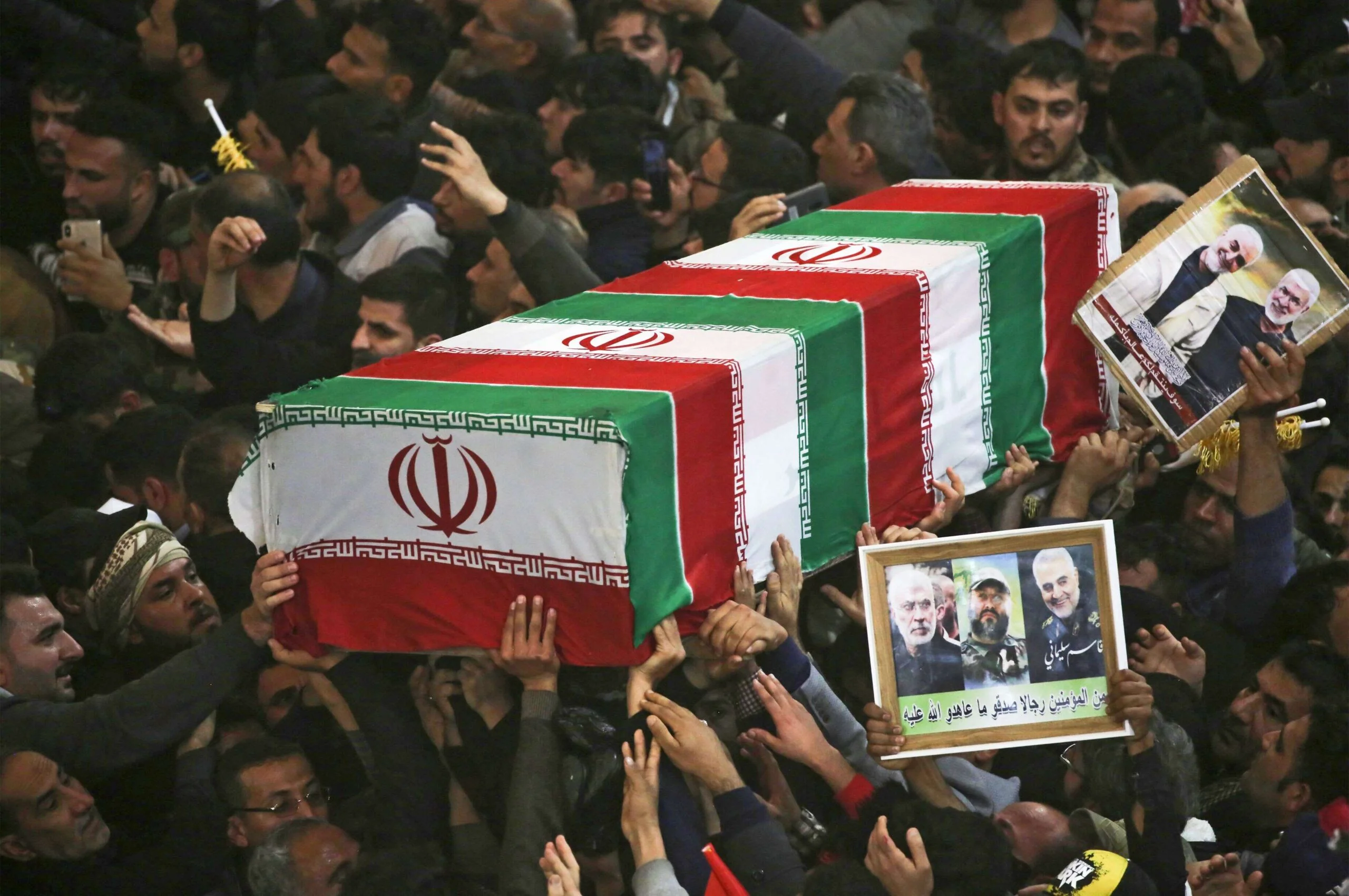
Mourners carry the coffins of slain Iranian military commander Qasem Soleimani, Iraqi paramilitary chief Abu Mahdi al-Muhandis and eight others inside Shrine of Imam Hussein (a.s.) in the Holy City of Karbala, during funeral procession on January 4th, 2020.

Mourners carry the coffins of slain Iranian military commander Qasem Soleimani, Iraqi paramilitary chief Abu Mahdi al-Muhandis and eight others inside the Shrine of Imam Hussein (a.s.) in the Holy City of Karbala during a funeral procession on January 4th, 2020.
State TV aired live footage of hundreds of thousands of followers in the streets of the town; many of them wore black dresses to mourn Qasem Soleimani.

Qasem Soleimani was largely attributed as Iran’s second most influential figure behind Supreme Leader Ayatollah Ali Khamenei, who also wept in grief along with thousands of mourners who jammed the streets of Tehran for Soleimani’s funeral.

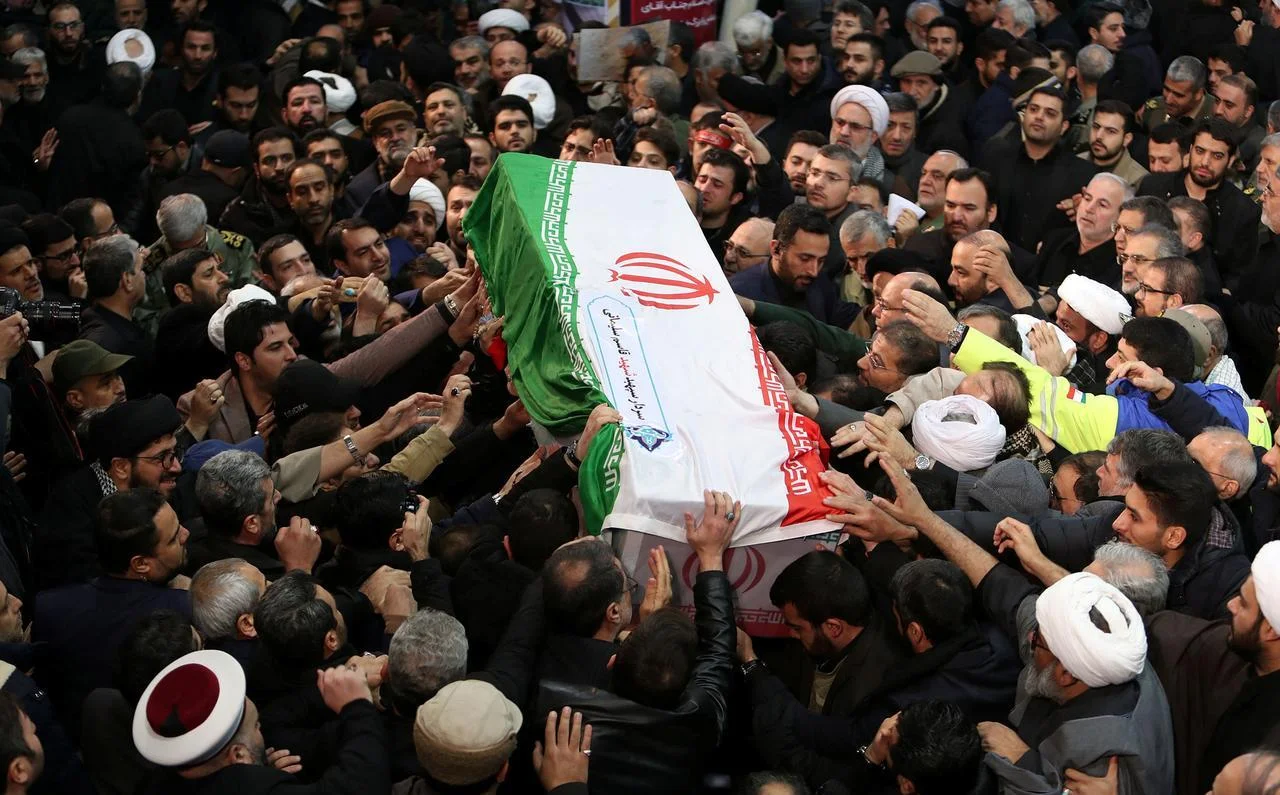
Funeral prayers were held in the Iranian Capital, Tehran. Khamenei led the prayers while continuously pausing, his voice cracked with emotion. Qasem Soleimani, 62, was a hero even to many who do not consider themselves supporters of the Iranian regime.

Khamenei treas at Soleimanis funeral
Ayatollah Ali Khamenei leading prayers for Soleimani’s funeral

He was killed in a U.S. airstrike in Baghdad, leaving International Airport on Friday, January 3rd.

Mourners thronged the streets, chanting: “Death to America!” – an expression of national unity after anti-government protests in November in which several demonstrates were slain.

People gathered for funeral of Qasem Soleimani

The crowd, which the state media said numbered millions, reminded the masses gathered in 1989 for the funeral of the Islamic Republic’s founder, Ayatollah Ruhollah Khomeini.

The killing of General Qasem Soleimani has triggered fears around the world of a wider regional conflict, as well as calls in the U.S. Congress for legislation to limit President Trump’s actions from going into a war against Iran.

About Writer

More News

Trump and Xi Meeting Ends with High Stakes, Few Deals, and a Taiwan Warning

US President Donald Trump arrived in Beijing on May 13 for the most consequential American presidential visit to China in nearly a decade, touching down at Beijing Capital International Airport to a ceremony featuring an honor guard and crowds of children waving Chinese and American flags. The two day summit opened with warm words and a careful agenda, but by the time both sides released their readouts of the first day of talks, it became clear that Washington and Beijing were still telling very different stories about what had happened in the room. How the Summit Opened Trump was greeted by...

BYD and KFC Changing the Future of EV Charging

In a move that blends fast food with futuristic mobility, Chinese electric vehicle giant BYD has partnered with KFC to introduce a new concept that could redefine how people think about charging their cars. Instead of waiting at traditional charging stations, drivers in China may soon be able to recharge their vehicles while picking up a meal in just minutes. The collaboration focuses on what both companies describe as a nine-minute one-stop refueling experience. This idea is built around BYD’s advanced battery technology, which can charge a vehicle from low levels to nearly full capacity in about nine minutes. Solving One...

Two Months of Iran War | Who Is Winning, Who Is Losing, and Who Is Still Deciding?

Two Months Into the Iran War When Donald Trump launched the war on Iran on February 28, he told the world it would be quick, decisive, and worth it. Ten days in, he said the United States had already won the war “in many ways.” (function(w,q){w=w||;w.push()})(window,"_mgq"); Two months later, a definitive end to the conflict is nowhere in sight. A ceasefire is in place but fragile. Diplomacy keeps stalling. And almost every country pulled into this war willingly or not is paying a price it did not budget for. (function(v,d,o,ai){ai=d.createElement('script');ai.defer=true;ai.async=true;ai.src=v.location.protocol+o;d.head.appendChild(ai);})(window, document, '//a.vdo.ai/core/v-livenewsof/vdo.ai.js'); “There aren’t any real winners from the war, but there are some...

Trump Criticizes Pope Leo Over Iran Peace Appeal

(function(w,q){w=w||;w.push()})(window,"_mgq"); US President Donald Trump has sparked fresh controversy after publicly criticizing Pope Leo following the pontiff’s appeal for peace amid the ongoing Iran conflict. The clash highlights growing tension between political leadership in Washington and the Vatican’s moral stance on war and global diplomacy. The dispute began after Pope Leo made a strong statement urging world leaders to avoid further escalation and prioritize peace. Without directly naming Trump, the pope warned against using power or religion to justify war. His remarks were widely interpreted as criticism of US policy. Trump responded on social media, calling the pope weak on crime and...

Why Trump Is Blockading a Strait Iran Is Already Blocking

After peace talks in Islamabad collapsed, President Trump announced the US Navy would “immediately” begin blockading the Strait of Hormuz. There is one obvious question: why would the US blockade a waterway it has been demanding Iran reopen? (function(w,q){w=w||;w.push()})(window,"_mgq"); The Strait Is Not Fully Closed Iran has not technically sealed the Strait completely. It has been allowing some vessels through in exchange for tolls of up to $2 million per ship. Crucially, Iran has kept its own oil flowing throughout the war, exporting an average of 1.85 million barrels per day through March, slightly above pre-war levels, according to data firm Kpler. The...

Latest Articles