
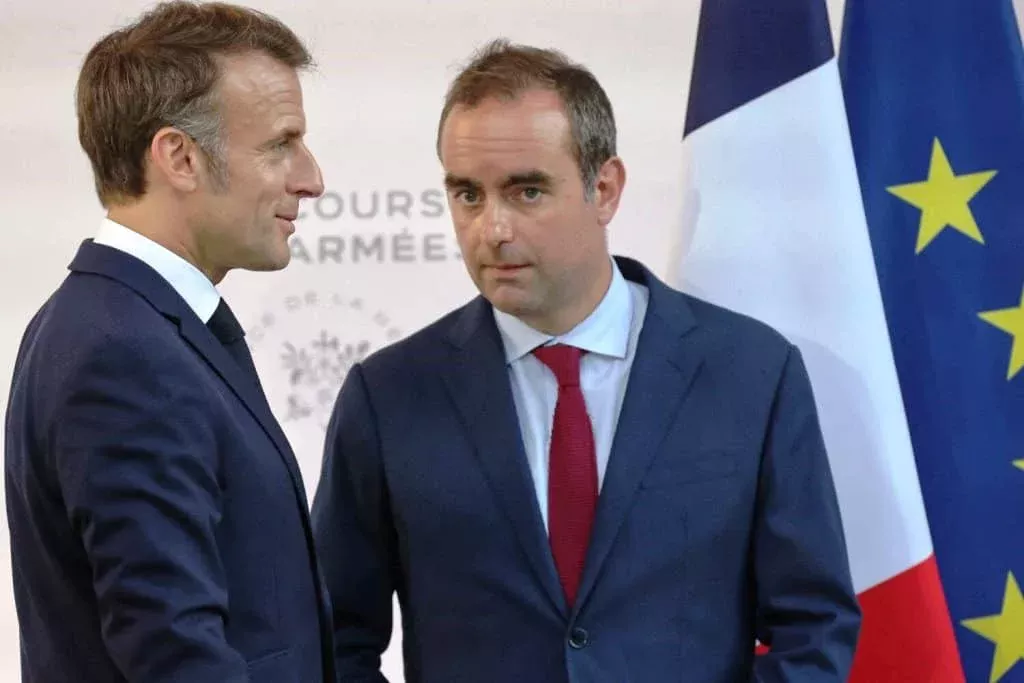
France is changing its prime minister for the fifth time in two years, Sébastien Lecornu having resigned on September 29, 2025, just a few days before the 2026 budget deadline.
His reshuffled cabinet flared an uproar, and therefore, the head of France was left without an answer at a decisive moment. The road to this turmoil was paved by François Bayrou’s departure in August, following the failure of the austerity plans, which, among other things, involved cutting holidays and freezing spending.
Lecornu, who is now in charge of the office, keeps saying that a budget can be approved by December 31, but I am not convinced. In such a situation, with a divided parliament and no coalition, it is challenging to implement debt reforms; thus, France is edging towards a fiscal cliff.
Social Spending Drains Budget
France’s generosity is its downfall. Social programs, including pensions, unemployment benefits, and subsidies, account for 23.3% of the country’s GDP. The pensions that people receive at the age of 62 are luxurious, and benefits such as reimbursement of long-term care expenses are putting pressure on the budget.
Earlier, there was heavy spending during the COVID-19 period and the 2022 energy crisis; consequently, the debt has increased to 116.5% of GDP. Frankly, it is not in a position to continue financing commitments that it cannot afford, yet it still does. Markets are gradually discovering the reality, and therefore borrowing costs are increasing due to a loss of investor confidence.
Protest Chances Rising Due to High Taxes
Cut spending or increase taxes? There’s no way to come out on top. Taxes in France represent the highest share of the EU at 45.6% of GDP, so even small increases could lead to riots. The tax cuts for businesses and the abolition of the wealth tax implemented by Macron in 2017 were the main reasons for the “president of the rich” protests. The return to work at 64, following the reform of the pension system, which raised the retirement age to 64, has been the cause of the strikes in 2023.
A slight reduction in the cost of cab rides for medical trips provoked an uproar in the community. Austerity is a dirty word in France, and with public anger boiling, any fiscal fix risks lighting a match in a gas-filled room.
Macron’s sudden 2024 election has split the National Assembly. It caused budget restoration to stop because there is no longer a majority in the House. France, Europe‘s top spender as a share of GDP, is unable to alter anything amid demonstrations. Italy seems safer with a higher debt, given a constant alliance that reduces deficits. France’s bond returns are now above those of Italy, which the markets should take as a warning. This isn’t just a hiccup; it’s a structural failure, making France the eurozone’s weakest link and unable to tackle its debt trap.
Bond markets are nervous, ranking France riskier than Italy or 2011 crisis veterans like Portugal. In 2027, a victory of Marine Le Pen’s far-right or Jean-Luc Mélenchon’s far-left might lead to a market panic. Higher yields brought about by Le Pen’s expense programs or Mélenchon’s tax increases might trigger another eurozone crisis. France is heading in a not-so-good direction, but there is no impending collapse. Investors’ worries are reflected in the rising cost of borrowing, and if no action is taken, France could be on the verge of a string of more severe problems.
The cutting of spending or the raising of taxes will likely be met with protests, and the fact that Macron is disgraced doesn’t help at all. A coalition could bring some stability, but the 2027 elections are still very far away. Populists like Le Pen or Mélenchon will be able to put markets in a tailspin if they win. France is required to make radical cuts in the benefits it cannot afford, but the disorder is complicating the process. If this situation persists, France will likely be the one to drag the eurozone into a 2027 analysis.