
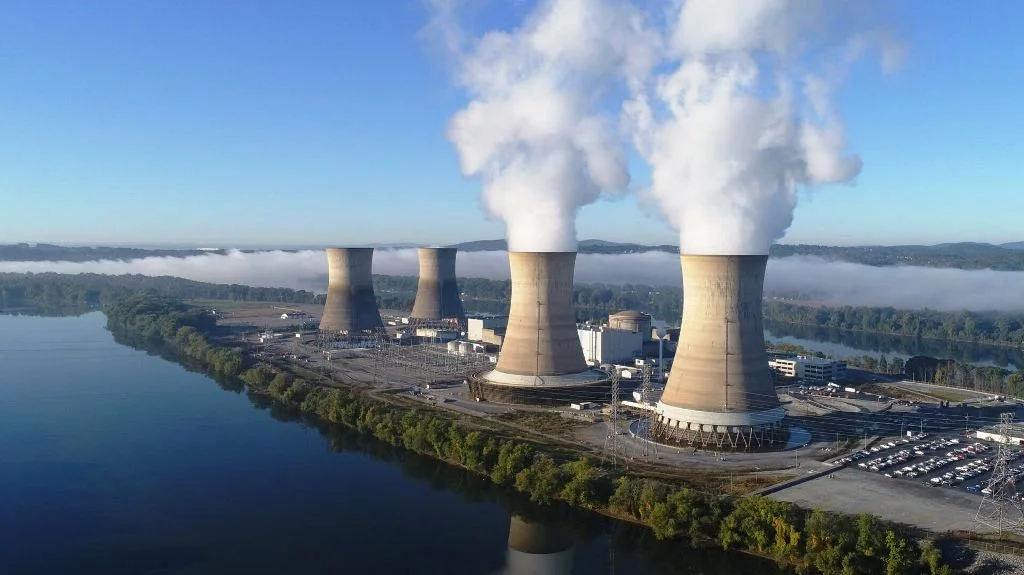
Proxima Fusion Raises $148M to Build Europe’s First Fusion Power Plant

Get an AI-generated summary of this article.

AI-generated article summary

Key Points:

  • German startup Proxima Fusion has raised €130 million ($148 million) in a record-breaking Series A funding round, marking the most significant private investment in nuclear fusion in Europe.
  • The round, co-led by Cherry Ventures and Balderton Capital, supports Proxima’s goal to build the first commercial fusion power plant by the 2030s.
  • CEO Francesco Sciortino says the funding will enable the development of superconducting magnets and a stellarator by 2031 to achieve a net energy gain.
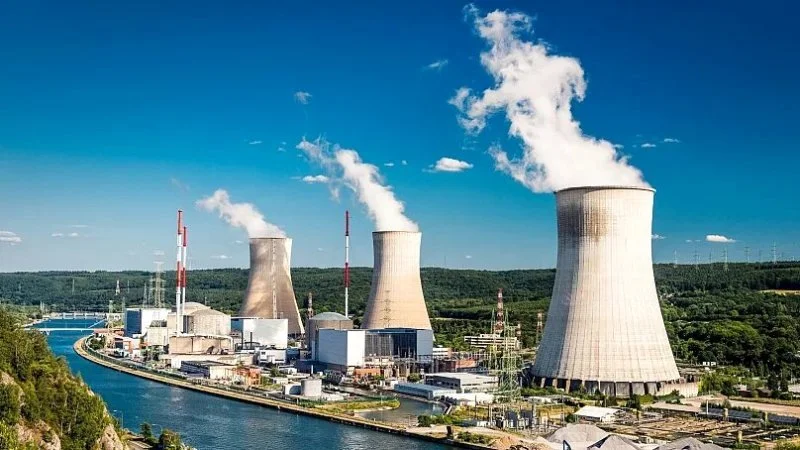
Germany to build Europe's first nuclear fusion energy power plant

On June 11, 2025, Munich-based Proxima Fusion announced it raised €130 million ($148 million) in a Series A funding round. Co-led by Cherry Ventures and Balderton Capital, it’s Europe’s most significant private nuclear fusion investment. The round included Bayern Kapital, DeepTech & Climate Fonds, UVC Partners, and other investors, bringing the total funding to over €185 million. Investors aim to make Proxima the first to deliver a commercial fusion power plant, targeting the 2030s.

Why Fusion Matters?

Nuclear fusion combines hydrogen atoms to form helium, releasing vast amounts of energy, as seen in the Sun. The International Atomic Energy Agency says industrial-scale fusion could provide limitless, clean, and safe energy. Unlike fission, fusion does not produce long-lived radioactive waste.

Since the 1930s, scientists have been pursuing fusion, but significant challenges remain. Proxima’s CEO, Francesco Sciortino, said, “Fusion is a strategic opportunity to shift energy dependence to technology.” He believes Proxima’s team and partnerships with institutions like the Max Planck Institute for Plasma Physics position it to lead Europe’s fusion efforts.

Proxima, a 2023 spin-out from the Max Planck Institute, uses a stellarator design. Unlike tokamaks, stellarators use magnetic fields to confine plasma in a donut shape without needing a plasma current, making them more stable.

The U.S. Department of Energy notes that stellarators allow for precise plasma control in fusion. Proxima builds on Germany’s Wendelstein 7-X, a €1.3 billion public project. “Stellarators are the power plants of the future,” said Balderton’s Daniel Waterhouse. Proxima’s Stellaris design and AI-driven engineering aim for a 2031 demonstrator.

The funds will develop superconducting magnets, critical for stellarators, with a Stellarator Model Coil scheduled for delivery in 2027. Proxima plans an Alpha demonstrator by 2031 to achieve net energy gain (Q>1). The company will expand its 80-person team across Munich, Paul Scherrer Institute, and Culham Fusion Campus.

Sciortino told TechCrunch the round’s speed—half the projected time—shows investor confidence. On X, @EnergyNews praised Proxima’s European focus, citing the energy security needs following the invasion of Ukraine.

Critics argue commercial fusion is far off. Researchers told CNBC scaling fusion for commercial use could take decades. Unlike U.S. rivals like Commonwealth Fusion Systems, which raised $2 billion, Proxima’s €185 million is modest. Stellarators, though stable, require complex engineering.

On X, @FusionSkeptic warned of overhyped timelines, citing past delays in fusion research. Proxima counters with its StarFinder framework and AI to accelerate the design process.

Europe’s Fusion Push

Europe seeks energy independence, spurred by Russia’s 2022 invasion of Ukraine. German Chancellor Friedrich Merz supports fusion research, per Bloomberg. The European Commission funds fusion via EUROfusion, contributing €679 million. Proxima’s funding aligns with Mario Draghi’s 2024 report, which urges the establishment of a stable fusion ecosystem. On X, @CleanTechEU referred to Proxima as a “European treasure” for energy sovereignty.

Proxima aims to demo magnets by 2027 and a stellarator by 2031, targeting a commercial plant by the mid-2030s. It’s negotiating with European governments for an Alpha site. More funding will be needed, per Sciortino. If successful, Proxima could transform Europe’s energy landscape; however, failure risks delaying the promise of fusion. On X, @SciTechDaily urged focus on milestones to maintain momentum.

About Writer

Nathan Enzo
Nathan Enzo
A professional writer since 2014 with a Bachelor of Arts in Journalism and Mass Communication, Nathan Enzo ran the creative writing department for the major News Channels until 2018. He then worked as a Senior content writer with LiveNewsof.com, including national newspapers, magazines, and online work. He specializes in media studies and social communications.

More News

Trump Criticizes Pope Leo Over Iran Peace Appeal

US President Donald Trump has sparked fresh controversy after publicly criticizing Pope Leo following the pontiff’s appeal for peace amid the ongoing Iran conflict. The clash highlights growing tension between political leadership in Washington and the Vatican’s moral stance on war and global diplomacy. The dispute began after Pope Leo made a strong statement urging world leaders to avoid further escalation and prioritize peace. Without directly naming Trump, the pope warned against using power or religion to justify war. His remarks were widely interpreted as criticism of US policy. Trump responded on social media, calling the pope weak on crime and...

Why Trump Is Blockading a Strait Iran Is Already Blocking

After peace talks in Islamabad collapsed, President Trump announced the US Navy would “immediately” begin blockading the Strait of Hormuz. There is one obvious question: why would the US blockade a waterway it has been demanding Iran reopen? The Strait Is Not Fully Closed Iran has not technically sealed the Strait completely. It has been allowing some vessels through in exchange for tolls of up to $2 million per ship. Crucially, Iran has kept its own oil flowing throughout the war, exporting an average of 1.85 million barrels per day through March, slightly above pre-war levels, according to data firm Kpler. The...

Islamabad Talks | US and Iran Fail to Reach a Deal After 21 Hours

The most significant US-Iran diplomatic meeting since the 1979 Islamic Revolution ended without a deal on Sunday. After 21 hours of face-to-face talks in Islamabad. Both sides left the table blaming each other. The ceasefire that expires April 22 now hangs by a thread. What Happened in the Room The talks were the first direct US-Iranian engagement since the 2015 top-level engagement. Vice President JD Vance led the American delegation alongside Steve Witkoff and Jared Kushner. Iran was represented by Parliament Speaker Mohammad Bagher Ghalibaf and Foreign Minister Abbas Araghchi. Al Jazeera's correspondent in Islamabad described the outcome as “neither a breakthrough...

US Iran Talks Could Reshape Middle East Power Balance

A Rare Diplomatic Moment Between US and Iran The United States and Iran have entered a critical phase of diplomacy as both countries begin direct negotiations in Islamabad, Pakistan. These US Iran talks come after weeks of rising tensions that brought both nations close to conflict. While a temporary ceasefire is currently in place, the situation remains fragile. This meeting is significant because it represents one of the few direct engagements between Washington and Tehran in recent history. For decades, relations between the US and Iran have been shaped by mistrust and political conflict. The decision to begin talks shows that...

Five points to know about Iran US Talks in Islamabad

Pakistan is hosting one of the most consequential diplomatic meetings in decades. The United States and Iran are holding their highest level talks in years in Islamabad, in a Pakistan brokered bid to turn a fragile two week ceasefire into a lasting end to a war that has roiled global energy markets. The War That Made These Talks Necessary On February 28, the US and Israel launched deadly coordinated strikes that killed Supreme Leader Ali Khamenei and struck Iran's military and nuclear infrastructure. More than 3,000 people were killed in Iran in five weeks, according to Iranian media and...

Latest Articles