

Indian Immigrants’ Rise in U.S. Hotels

Get an AI-generated summary of this article.

AI-generated article summary

Premiering at the Tribeca Festival in June 2025, a new short film, The Patel Motel Story, reveals how Indian immigrants, primarily Gujaratis named Patel, build an Empire. Despite representing only 1% of the population, this group owns more than 60% of American hotels. Narrated by Amar Shah, who grew up as a “counter kid” at his parents’ Florida gas station, the film explores family scenes at motels, including graduations, weddings, and birthdays.

Shah, once embarrassed by the “rough” work, now views it as empire-building. Co-produced with Milan Chakraborty and Rahul Rohatgi, it answers the question: “How did this begin?” through interviews and historical research.

Desai’s Advice Triggers Motels
Patel Motel Story. Gujarati immigrants
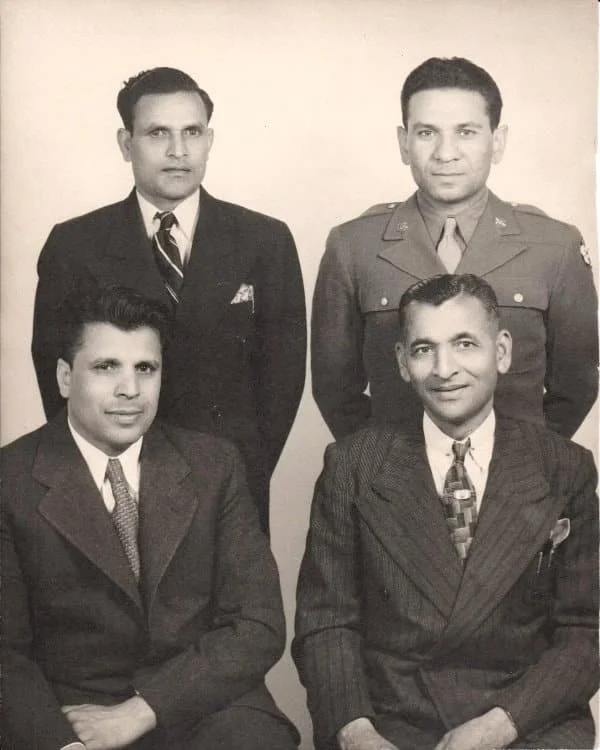
The photo features Nanalal Patel, Thakor Hansji Patel, D. Lal, and Kanji Manchhu Desai, friends who contributed to the success of Indian immigrants in the hotel industry, according to Doshi’s research.

The story starts with Kanji Manchhu Desai, an undocumented immigrant from Trinidad who arrived in 1934. After completing his fieldwork in California, Desai managed a Japanese American hotel during World War II internment, and then leased his own in San Francisco in 1942. He advised Gujaratis: “Lease a hotel.” Desai provided housing, loans, and guidance, helping families establish businesses. Taking from Mahendra K. Doshi’s book, “Surat to San Francisco,” the movie shows Desai as the godfather of Indian hotels.

Family Experiences and Growth

Jyoti Sarolia’s family followed Desai’s lead. Her great-uncles arrived in 1952, motivated by his letters. Sarolia answered phones at 9, cleaned rooms at 11, and ran hotels by 14. She said it was our play area, remembering hide-and-seek in hallways. Named for Ellis Island, her Ellis Hospitality Group now runs eight hotels spanning four generations. According to its reports, the AAHOA, with 20,000 members, produces billions of dollars in income and jobs. Hotel youngsters built resilience that resulted in success by juggling tasks and play.

Film Director’s Failed Stories

Shah, once a producer for ESPN, reconnected with his roots. He said that our parents’ generation is aging and stressed the need to maintain their fortitude. At AAHOACON, the Super Bowl of hospitality, they encountered owners with accounts of sacrifice. Although the movie corrects the narrative, not all Patels have to be related. Hasan Minhaj jokingly stated they own every motel. Plans for a docuseries or feature film include clips of diverse Patels, showcasing American dreams. On X, TribecaFilm praised the premiere on June 15, 2025, as “eye-opening.”

The film refers to it as “the greatest immigration story never told,” one that has been overlooked in history books. Patels’ dominance stems from their community ties and the opportunities that arose after World War II. Families made empires out of leases from Sacramento to Florida. Shah thought, They were creating real estate empires, not trapped. The story inspires, noting stability from counter children to corporate titans.


About Writer

Nathan Enzo
Nathan Enzo
A professional writer since 2014 with a Bachelor of Arts in Journalism and Mass Communication, Nathan Enzo ran the creative writing department for the major News Channels until 2018. He then worked as a Senior content writer with LiveNewsof.com, including national newspapers, magazines, and online work. He specializes in media studies and social communications.

More News

BYD and KFC Changing the Future of EV Charging

In a move that blends fast food with futuristic mobility, Chinese electric vehicle giant BYD has partnered with KFC to introduce a new concept that could redefine how people think about charging their cars. Instead of waiting at traditional charging stations, drivers in China may soon be able to recharge their vehicles while picking up a meal in just minutes. The collaboration focuses on what both companies describe as a nine-minute one-stop refueling experience. This idea is built around BYD’s advanced battery technology, which can charge a vehicle from low levels to nearly full capacity in about nine minutes. Solving One...

Iran War Day 50: Hormuz Closes Again, Trump Says Deal Is Near, Lebanon Ceasefire Holds

Fifty days into the US and Israel war on Iran, the situation on April 18 remains a tangle of contradictions. Trump said there are no sticking points left for a deal, while insisting the US blockade will remain until any agreement is fully complete. Meanwhile, Iran closed the Strait of Hormuz again until the US lifts the blockade of its ports hours after Trump said he was optimistic about reaching a deal with Tehran. The Strait of Hormuz Open, Closed, Open Again Iran reopened the Strait of Hormuz earlier on Saturday subject to conditions, in line with the Lebanon ceasefire and...

Trump Criticizes Pope Leo Over Iran Peace Appeal

US President Donald Trump has sparked fresh controversy after publicly criticizing Pope Leo following the pontiff’s appeal for peace amid the ongoing Iran conflict. The clash highlights growing tension between political leadership in Washington and the Vatican’s moral stance on war and global diplomacy. The dispute began after Pope Leo made a strong statement urging world leaders to avoid further escalation and prioritize peace. Without directly naming Trump, the pope warned against using power or religion to justify war. His remarks were widely interpreted as criticism of US policy. Trump responded on social media, calling the pope weak on crime and...

Why Trump Is Blockading a Strait Iran Is Already Blocking

After peace talks in Islamabad collapsed, President Trump announced the US Navy would “immediately” begin blockading the Strait of Hormuz. There is one obvious question: why would the US blockade a waterway it has been demanding Iran reopen? The Strait Is Not Fully Closed Iran has not technically sealed the Strait completely. It has been allowing some vessels through in exchange for tolls of up to $2 million per ship. Crucially, Iran has kept its own oil flowing throughout the war, exporting an average of 1.85 million barrels per day through March, slightly above pre-war levels, according to data firm Kpler. The...

Islamabad Talks | US and Iran Fail to Reach a Deal After 21 Hours

The most significant US-Iran diplomatic meeting since the 1979 Islamic Revolution ended without a deal on Sunday. After 21 hours of face-to-face talks in Islamabad. Both sides left the table blaming each other. The ceasefire that expires April 22 now hangs by a thread. What Happened in the Room The talks were the first direct US-Iranian engagement since the 2015 top-level engagement. Vice President JD Vance led the American delegation alongside Steve Witkoff and Jared Kushner. Iran was represented by Parliament Speaker Mohammad Bagher Ghalibaf and Foreign Minister Abbas Araghchi. Al Jazeera's correspondent in Islamabad described the outcome as “neither a breakthrough...

Latest Articles