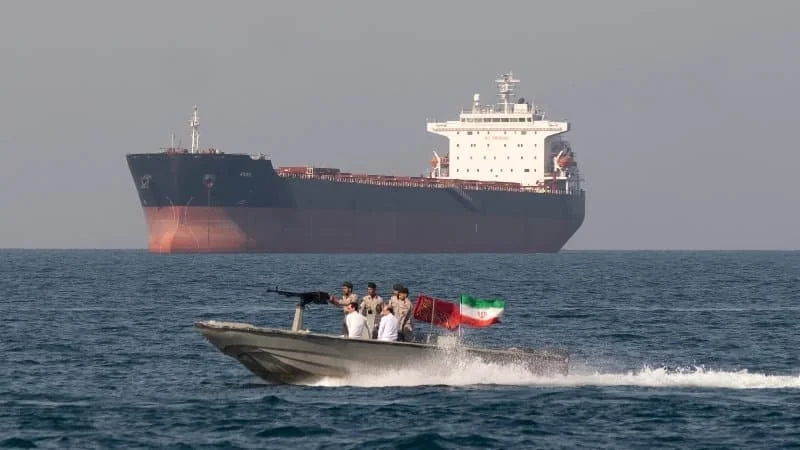
Oil markets are on edge Tuesday as US President Donald Trump’s 8 p.m. ET deadline for Iran to reopen the Strait of Hormuz draws closer and diplomacy remains stuck.
Where Oil Prices Stand Right Now?
Brent crude futures rose roughly 1.6% to around $111.51 a barrel, while US West Texas Intermediate climbed over 3% to $115.86 on Tuesday morning.
International benchmark Brent crude briefly reversed those gains, trading 0.4% lower at $109.37 per barrel, before recovering. WTI futures held 0.3% higher at $112.70. Markets are swinging in both directions as traders try to read the situation in real time.
WTI swung in a roughly $6.60 range in a single session, reflecting how uncertain traders are about what happens next.
Trump Doubles Down on Threats?
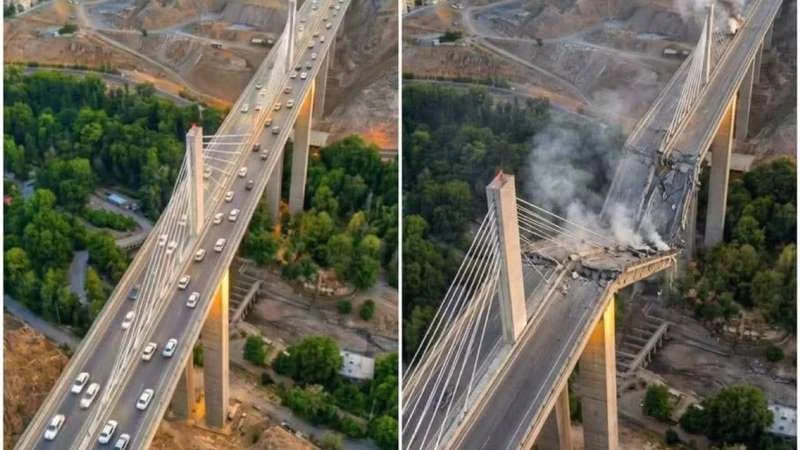
Trump repeated his threat Monday that the US would destroy Iran’s power plants and bridges if Tehran did not reopen the Strait of Hormuz by 8 p.m. ET Tuesday.
“We have to have a deal that’s acceptable to me, and part of that deal is going to be — we want free traffic of oil and everything else,” Trump told reporters at a press conference.
As Trump’s deadline approaches, Israel’s military also issued a warning to Iranians, saying their presence near railway lines endangers their lives — a warning ending just six and a half hours before Trump’s own deadline.
Iran’s deputy minister of youth and sports called on young people to form human chains around the country’s power plants in direct response to Trump’s infrastructure threats.
Iran Rejects Ceasefire, Demands Permanent End to War
Iran has rejected the US ceasefire proposal and instead presented its own 10-point plan, which includes a permanent end to hostilities in the region rather than a temporary pause, along with a protocol for safe passage through the Strait of Hormuz.
Tehran’s position is clear: no temporary deals, no short-term reopening of the strait, and no external deadlines.
The UN Security Council is expected to vote Tuesday on a resolution to protect commercial shipping through the strait, though only in a significantly weakened form after China objected to any authorization of force.
The Scale of This Energy Crisis
This is not a typical oil price spike. The head of the International Energy Agency described the situation as the “greatest global energy security challenge in history.”
The closure of the Strait has triggered the largest oil supply disruption in history. Nearly 1 billion barrels will be lost by the end of the month, comprising up to 600 million barrels of crude oil and roughly 350 million barrels of refined products, according to TD Securities.
“With the conflict now expected to last at least into deep April, the barrel math becomes increasingly grim,” said Ryan McKay, senior commodity strategist at TD Securities.
Shipping through the Strait of Hormuz has slowly resumed, with 8 tankers transiting on Monday, up from fewer than 2 per day in March. However, this remains a fraction of pre-war levels, where an average of 20 million barrels transited daily in 2025.
Regional Fallout Keeps Spreading
Saudi Arabia intercepted and destroyed seven ballistic missiles launched toward its Eastern Region on Tuesday, with debris falling near energy facilities.
Saudi Aramco raised the official selling price for its Arab Light crude to Asia for May delivery, setting a record premium of $19.50 a barrel.
OPEC+ agreed Sunday to increase production by 206,000 barrels per day in May. However, it remains unclear how that oil will reach global markets with the Strait still closed.
Asian nations including Japan, the Philippines, India, and Pakistan have individually secured deals with Iran to allow the safe passage of their flagged vessels through the strait, choosing direct diplomacy over waiting on Washington.