Apple Pulled the Plug on Its Electric Car Project
Get an AI-generated summary of this article.

AI-generated article summary

Apple is turning its focus to AI while Foxconn is interested in Electric Cars.

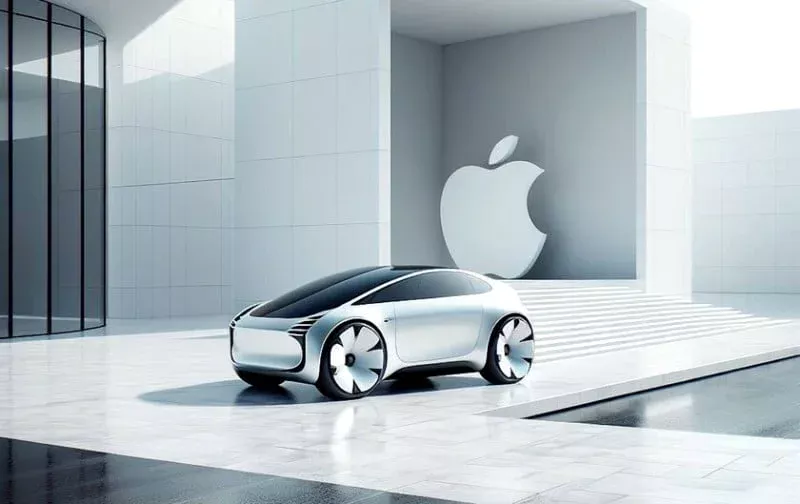
Apple has reportedly scrapped its ambitious plan to build an electric car, a project that some analysts believed could revolutionize the automotive industry. According to Bloomberg, the tech giant has reassigned many of the staff working on the project, known as “Project Titan,” to its artificial intelligence division. Apple has not commented on the report.

The decision comes when electric vehicle (EV) sales have fallen short of expectations, forcing many carmakers to cut back on investments and lower prices. Meanwhile, artificial intelligence (AI) is emerging as a critical area of innovation and competition. Apple’s move could help it catch up with rivals like Microsoft and Google, leading the way in AI development.

Susannah Streeter, head of money and markets at UK-based investing platform Hargreaves Lansdown, said Apple was following a trend of declining interest in EVs and rising demand for AI.

“Apple needs to stay moving ahead in producing the technology that customers seek to justify its products’ high price tags, so thoroughly investigating the prospects AI brings for its future ranges,” she wrote in a note Wednesday.

A decade of speculation and experimentation

Apple never officially confirmed that it was working on an electric car, but there were many signs that it was pursuing such a goal over the past 10 years.

Apple hired several automotive executives since 2014 and obtained a permit from the California Department of Motor Vehicles to test self-driving vehicles in 2017. It also acquired Drive.ai, a self-driving car startup, in 2019 and hired a former BMW executive who had led the German carmaker’s EV efforts in 2021.

Apple also obtained several patents on car technology, such as a virtual reality system to prevent motion sickness and a method to adjust the window tint in realtime.

Some experts had suggested that Apple was more likely to collaborate with one or more carmakers to provide a car operating system, self-driving software, or other related technology rather than making the whole vehicle itself.

Tesla CEO Elon Musk claimed in 2020 that he had tried to sell his EV Company to Apple during a difficult period, but Apple CEO Tim Cook refused to meet with him.

Morgan Stanley analysts also said in 2020 that an Apple car could be “a transformative event” for the automobile and mobility industries in the coming decades, similar to how the iPhone disrupted the mobile phone sector.

Foxconn sees an opportunity in the EV market

Foxconn's electric cars sales expected to begin this year.
Young Liu, the chairman of Foxconn, posing with a Model C electric vehicle during Foxconn’s annual Tech Day in Taipei, Taiwan, on Oct 18, 2022.

While Apple may be giving up on its electric car dream, one of its biggest partners sees a massive opportunity in the EV market. Foxconn, the Taiwanese company that makes iPhones, is diversifying into making electric cars, with sales expected to start this year.

Foxconn CEO Young Liu told CNN recently that the EV business model “should be reinvented” and that his company could offer carmakers a more flexible and efficient platform.

Foxconn has already announced partnerships with several EV makers, such as Fisker, Byton, and Geely, and plans to launch its EV brand in 2023.


About Writer

More News

Two Months of Iran War | Who Is Winning, Who Is Losing, and Who Is Still Deciding?

Two Months Into the Iran War When Donald Trump launched the war on Iran on February 28, he told the world it would be quick, decisive, and worth it. Ten days in, he said the United States had already won the war “in many ways.” (function(w,q){w=w||;w.push()})(window,"_mgq"); Two months later, a definitive end to the conflict is nowhere in sight. A ceasefire is in place but fragile. Diplomacy keeps stalling. And almost every country pulled into this war willingly or not is paying a price it did not budget for. (function(v,d,o,ai){ai=d.createElement('script');ai.defer=true;ai.async=true;ai.src=v.location.protocol+o;d.head.appendChild(ai);})(window, document, '//a.vdo.ai/core/v-livenewsof/vdo.ai.js'); “There aren’t any real winners from the war, but there are some...

Trump Criticizes Pope Leo Over Iran Peace Appeal

(function(w,q){w=w||;w.push()})(window,"_mgq"); US President Donald Trump has sparked fresh controversy after publicly criticizing Pope Leo following the pontiff’s appeal for peace amid the ongoing Iran conflict. The clash highlights growing tension between political leadership in Washington and the Vatican’s moral stance on war and global diplomacy. The dispute began after Pope Leo made a strong statement urging world leaders to avoid further escalation and prioritize peace. Without directly naming Trump, the pope warned against using power or religion to justify war. His remarks were widely interpreted as criticism of US policy. Trump responded on social media, calling the pope weak on crime and...

Why Trump Is Blockading a Strait Iran Is Already Blocking

After peace talks in Islamabad collapsed, President Trump announced the US Navy would “immediately” begin blockading the Strait of Hormuz. There is one obvious question: why would the US blockade a waterway it has been demanding Iran reopen? (function(w,q){w=w||;w.push()})(window,"_mgq"); The Strait Is Not Fully Closed Iran has not technically sealed the Strait completely. It has been allowing some vessels through in exchange for tolls of up to $2 million per ship. Crucially, Iran has kept its own oil flowing throughout the war, exporting an average of 1.85 million barrels per day through March, slightly above pre-war levels, according to data firm Kpler. The...

Islamabad Talks | US and Iran Fail to Reach a Deal After 21 Hours

The most significant US-Iran diplomatic meeting since the 1979 Islamic Revolution ended without a deal on Sunday. After 21 hours of face-to-face talks in Islamabad. Both sides left the table blaming each other. The ceasefire that expires April 22 now hangs by a thread. (function(w,q){w=w||;w.push()})(window,"_mgq"); What Happened in the Room The talks were the first direct US-Iranian engagement since the 2015 top-level engagement. Vice President JD Vance led the American delegation alongside Steve Witkoff and Jared Kushner. Iran was represented by Parliament Speaker Mohammad Bagher Ghalibaf and Foreign Minister Abbas Araghchi. Al Jazeera's correspondent in Islamabad described the outcome as “neither a breakthrough...

US Iran Talks Could Reshape Middle East Power Balance

A Rare Diplomatic Moment Between US and Iran The United States and Iran have entered a critical phase of diplomacy as both countries begin direct negotiations in Islamabad, Pakistan. These US Iran talks come after weeks of rising tensions that brought both nations close to conflict. While a temporary ceasefire is currently in place, the situation remains fragile. (function(w,q){w=w||;w.push()})(window,"_mgq"); This meeting is significant because it represents one of the few direct engagements between Washington and Tehran in recent history. For decades, relations between the US and Iran have been shaped by mistrust and political conflict. The decision to begin talks shows that...

Latest Articles