
The U.S. Health Department has shipped more than half a million antibody doses, which, if provided early enough after an infection is identified, can keep COVID patients out of the hospitals.
This would ease overburdened hospitals and help them avoid additional strain.
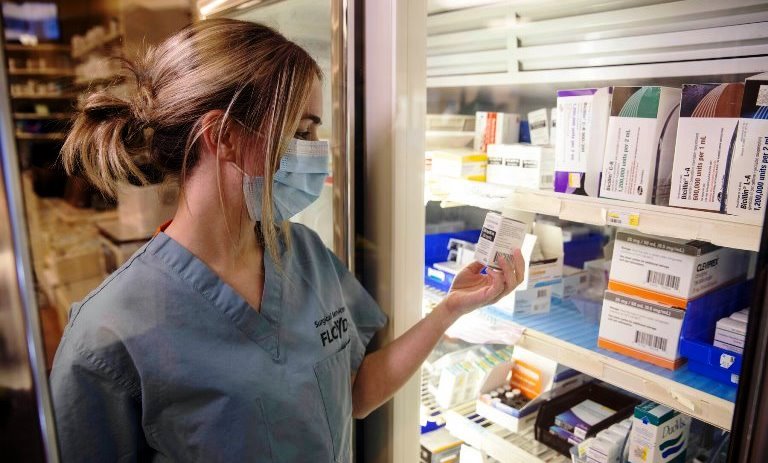
“The drugs still being underutilized despite their effective results, said Trump administration health representatives on Thursday. The officials said that many coronavirus sufferers don’t see how to reach them, and medical centres are not prescribing the medications or organizing the infusion places required to administer the drugs.
“I want my teammates to listen to me,” Dr. Jerome Adams, a U.S. surgeon general, told reporters. “We need to be thoughtful about and be keen to prescribe these drugs much more regularly as an approach to safeguard our patients, maintain the capacity of our hospitals, and comfort our tired colleagues.”
In November, the Food and Drug Administration released emergency recommendations for antibody medications from Regeneron and Eli Lilly. The drug from Regeneron was also given to President Donald Trump, who said it made him feel well “immediately” when he was in a medical facility with a Covid infection in Oct. 2020.
The hospitals have recorded a number of issues related to suggesting the medications.
These deliver the best results when given to a coronavirus patient early in their disease. The basic problem is that the test reports for COVID-19 may be delayed, and people probably do not get care until they’re already presenting symptoms, lessening the positive impact of the antibody treatments.
The medications are also hard to oversee. The hospitals have to preserve infusion centres with devoted staff to dispense them, but some patients may face difficulty reaching those sites, and giving the drugs to someone at home is a labour-intensive job.
It takes over an hour to provide them to people via an IV infusion and requires an extra hour of observing afterwards.
Even with troubles, it’s still worthwhile for hospitals to form infusion centres and prevent more citizens from getting seriously sick with the infection, said Dr Janet Woodcock, director of Drug Evaluation and Research at the FDA.
The FDA says the treatments found most effective for people 65 years or older or those with chronic health conditions.
“Some of the sites may be uncommon, not in hospitals but at other spots, to take those high-risk patients who have high chances of getting hospitalized, going into the ICU and so forth, to provide them with antibodies as soon as possible during the illness,” Woodcock said while talking to reporters.
The U.S. has significantly magnified its efforts to infuse the medications to Covid sufferers. On Monday, the Health and Human Services Department introduced a “treatment locator” for patients and healthcare workers to find appropriate places for antibody treatments.
T he U.S. Department of Health and Human Services (HHS) reported that over 641,000 doses of the treatment options had been given as of Jan. 6, but 75% remained unused.
The federal government announced Thursday it bought more than 1.2 million extra treatment courses of Regeneron’s drug. The new purchases will be delivered during the first half of 2021. If required, that brings the government’s supply of antibody medications to roughly 5 million courses.
According to data from Johns Hopkins University researchers, the increased supply and momentum from the Trump administration have resulted in approximately 245.306 people testing positive for COVID every day.
There are over 130,300 hospitalized patients with COVID across the country, twice the number of patients since mid-November before the winter holiday, according to COVID Tracking Project‘s data, which is generated by journalists at The Atlantic.
New Covid variants and antibodies’ efficacy
Experimental studies have shown the antibody reduces the viral load in patients, shortens symptoms, and, most notably, puts people out of the hospital, said Woodcock.
Yet some medical experts are anxious that there is not sufficient proof that drugs work.
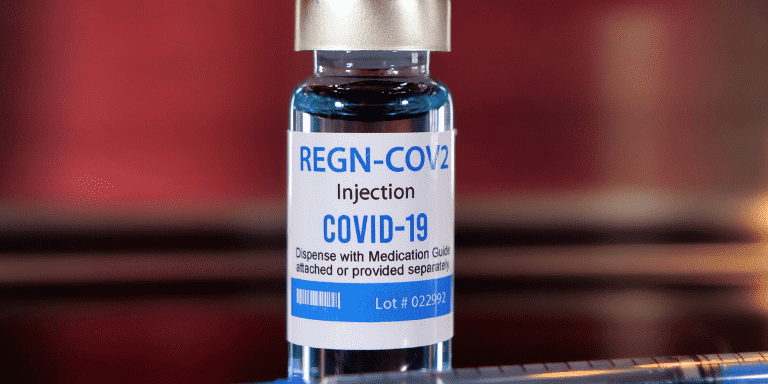
The Infectious Diseases Society of America spoke against the regular utilization of Eli Lilly’s treatment, referring to a lack of data.
The National Institutes of Health also said the drug “shouldn’t be viewed as the standard of care.”
New trials should offer a better understanding of the drugs’ benefits. Still, Woodcock said there is also a “real world” indication from healthcare systems that have witnessed the effectiveness of these antibodies.
She added that “active examining” by researchers will confirm whether the new Covid transmutations impact treatments.
“It is very much in the cards that any variant, or some variant at some point, could get away from neutralization by any of these two antibodies,” Woodcock anticipated, adding, “That’s also the reason we’re focusing toward groupings, or pretended cocktails, of monoclonals because it’s much less possible that any variant would escape both of them simultaneously.”