
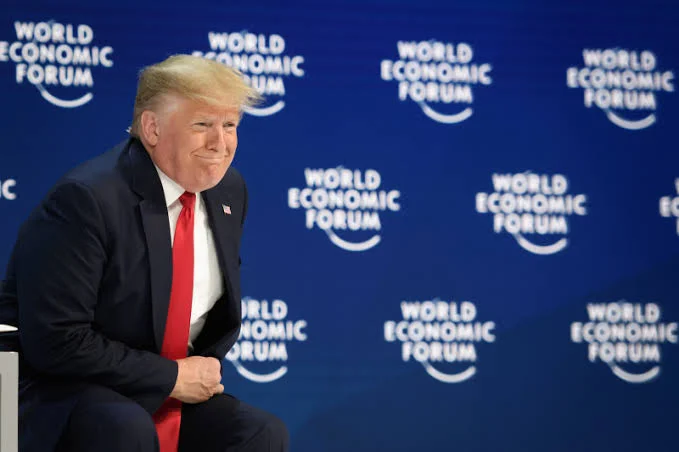
The EU member is standing firm regarding its policies to implement digital services taxes on U.S. tech giants in the months ahead, despite President Trump’s warning to respond against the move.
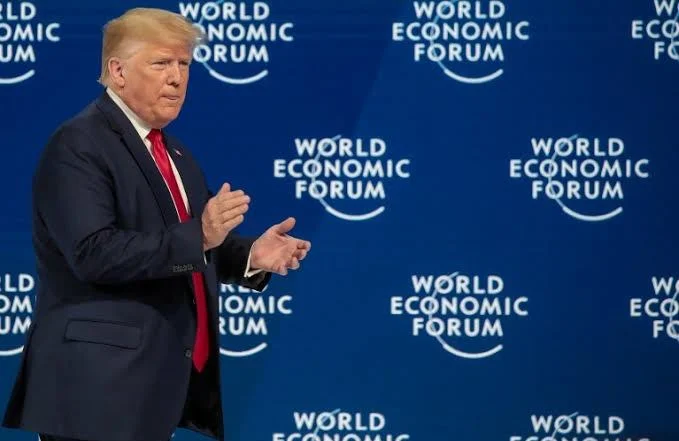
However, how long that stand-up against the U.S. can last amid the penalty in the form of tariffs on the EU’s lucrative (and vulnerable) car industry is yet to be witnessed.
Finance ministers from the U.K., Italy, and France have told CNBC that they might consider taxing U.S. digital tech companies if a global solution cannot be finalized.
Levies would strike U.S. tech companies such as Amazon, Facebook and Google.
Roberto Gualtieri, Italy’s Economy and Finance Minister, told CNBC Wednesday, “If there will be no solution at a global level, we’ll move ahead,” but added, “We are deeply committed to finding a global solution to this problem.”
“We are engaged in the proceeding on an international basis. Our tax is designed so that nobody has to pay at the moment. The payment is due to happen in the following year. And it already has a sunset clause, so it will automatically expire if there is a worldwide solution,” Gualtieri said.
For its part, France plans to impose a 3% tax on sales generated by tech companies. The U.K. also signalled proposals to levy a 2% tax on the revenue of social media platforms, search engines, and online marketplaces that develop value from U.K. users.
Italy publicized a similar 3% tax on internet transactions as well.
Digital tax solution is expected at the World Economic Forum
The Economic Co-operation and Development (OECD) has mediated to try and find a worldwide solution, and there are hints of a ceasefire, with France already agreeing to delay the implementation of its digital tax.
Italy and the U.K. have demonstrated that their tax proposals were either short-term or in lieu of a global solution led by the Organization for OECD.
Angel Gurria, the OECD secretary-general, told CNBC this week that he believed a solution could be established by the end of the year.
French Foreign Minister Bruno Le Maire responded to reports at the World Economic Forum on Wednesday that his country had embraced a deferral of the payments to the end of 2020, but the competition was not yet over.
“The U.S., in exchange for this postponement, accepts to suspend the sanctions against France,” Le Maire said.
He suggested the OECD must ensure the creation of a fair international framework for digital taxation.
Bruno Le Maire further told reporters at the World Economic Forum, “We still require a clear idea of the working basis at the OECD. And we wish this basis to be solid, fair, and credible. An optional basis wouldn’t be credible. So, there is still some work to be done.”
U.K. Finance Minister Sajid Javid told a program on CNBC Wednesday that his country would implement its digital services tax in April and was ready to incorporate it into an international deal.
“It’s a proportionate tax and a tax that is deliberately designed as a temporary tax,” Javid said, adding, “It will fall away when there’s an international agreement.”
Fairness and threat
The EU Commission has repeatedly stressed that it is almost unfair how tech companies are making an enormous profit from consumers within their countries but paying little taxes in comparison.
Digital taxes could provide millions of pounds and euros for European countries.
Washington has announced that the taxes would unfairly hit U.S. firms for now. President Trump and U.S. Secretary of State Steven Mnuchin have threatened aggressive measures.
Mnuchin told a CNBC-moderated panel at the World Economic Forum in Davos that the United States would retaliate by disagreeing with any “arbitrary” and “discriminatory” digital taxes.
He also warned that countries that impose a digital tax could “find themselves facing President Trump’s tariffs. “If people want to introduce taxes arbitrarily on our digital firms, we will put taxes arbitrarily on their car companies.
Any levies in Europe’s car sector would be punitive for the region, which derives a considerable chunk of its economic development and jobs from the industry.
According to the data made available by the European Automobile Manufacturers Association (EAMA), the turnover generated by the automotive industry represents 7% of the EU’s total GDP. The sector employs around 13.8 million Europeans directly and indirectly, accounting for about 6.1% of all jobs in the EU.
The auto industry of Europe was already exposed by Trump’s proposed import tariffs in 2018 when the U.S. President warned of a 25% import charge on every car from the EU.
However, those were put on hold while the U.S. aimed to negotiate a trade agreement with China. A decrease in car sales and challenges hitting greener technologies have already dug out the woes of the auto sector.
Trump has said this week that the EU is in his sights again. On Wednesday, he told CNBC’s Joe Kernen that Europe has been “very tough to deal with” and surely has “taken advantage” of the U.S.
He added that the EU Commission has “no choice” but to agree on a new trade deal with America and that if Europe did not confirm, he would allegedly need to “take action” in the form of “very high tariffs on their cars and other goods and services.”