
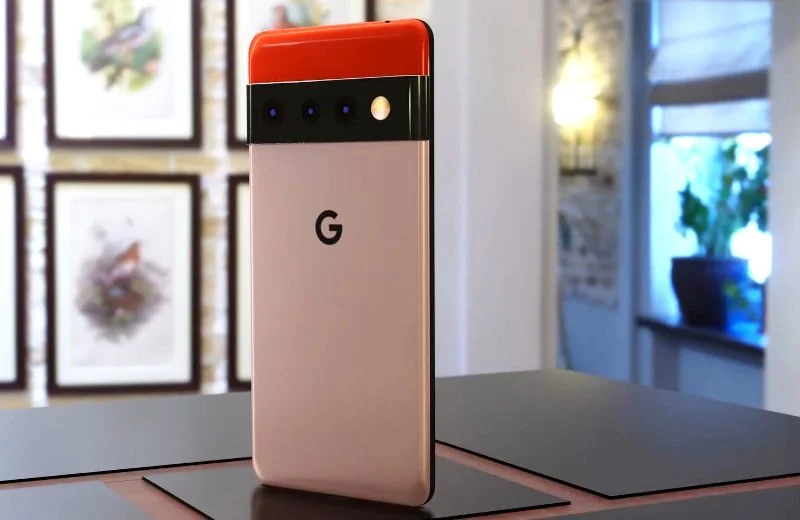
Google Pixel 6 will come with a newly built smartphone processor this year

Get an AI-generated summary of this article.

AI-generated article summary

On Monday, Google announced that its new Pixel 6 and Pixel Pro phones will use a new smartphone processor called Google Tensor. In this case, Google is abandoning Qualcomm and following in the footsteps of Apple, which is also using its own processors instead of Intel chips.

Pixel phones will come with Google new processor

Google’s intention implies another example of a company creating its own chips to offer something it believed wasn’t achievable with those already on the market.

Google, like Apple, is working on an Arm-based architecture. This architecture delivers low-power Arm processors used for mobile devices across the industry, from phones to laptops and tablets.

“We will continue to collaborate with Google on current and later products based on its Snapdragon platform,” Qualcomm said.

Google said the new processor will power flagship phones that will launch in October. More details about those phones will be shared closer to launch.

Analysts called it a strategy shift for Google, which, in past years, has worked to make its Pixel phones affordable instead of offering high-end devices. This move shows that the company is again focused on competing against Samsung and Apple in the flagship space.
Google’s new processor’s name is a nod to its Tensor Processing Unit, which the company already uses for cloud computing.

Built on a chip, or SOC, Google Tensor is said to be a complete system. It can deliver big improvements to phone video and photo processing, along with features like translation and voice-to-speech.

It has a dedicated processor that manages artificial intelligence applications and a GPU, CPU, and image signal processor. Instead of just sending information to the cloud, the new processor will enable the phone to process more data on the device.

Rick Osterloh, Google’s hardware chief, explains that the problem with Pixels is that the company keeps using the existing off-the-shelf technology, and it has become challenging to receive the most advanced stuff from research teams onto the phone.

“It is really going to meet what we can execute on the phone with AI and machine learning,” Osterloh said.

Osterloh further said the new chip will improve the ability of Google’s phones to take better videos and photos. It will be a custom computer built for computational photography.

Google’s claim that its new chip will improve picture quality is a big one because Pixel phones are already powered by some of the market’s best cameras. However, the company showed an example of how the new chip can reduce blurring during subject movement in a video. The same technology can now be used to improve videos, which wasn’t possible with earlier chips.

The company also showed other examples, such as a faster and more precise text-to-speech function when speaking out a text message and a new offline translation function for video captioning.

Those are clear examples of the power of the newly developed chip by Google, but they are probably not enough to make people choose a Pixel over an iPhone or a Samsung device. And that’s the issue Google truly needs to cope with getting more people to buy a Pixel phone in the first preference.

Most of Google’s earlier phones were also nice, but the company needs to launch more marketing campaigns to make consumers aware of the products or that they’re fine.

The company needed help getting all the principal carriers to offer its earlier models to them, and it still needs to be clarified if it has all of them on board now. However, Osterloh stated that Google expects a big marketing push around its Pixel 6 and Pixel 6 Pro devices in the fall, with the ambition to continue manufacturing more flagship-tier phones.


About Writer

More News

Trump and Xi Meeting Ends with High Stakes, Few Deals, and a Taiwan Warning

US President Donald Trump arrived in Beijing on May 13 for the most consequential American presidential visit to China in nearly a decade, touching down at Beijing Capital International Airport to a ceremony featuring an honor guard and crowds of children waving Chinese and American flags. The two day summit opened with warm words and a careful agenda, but by the time both sides released their readouts of the first day of talks, it became clear that Washington and Beijing were still telling very different stories about what had happened in the room. How the Summit Opened Trump was greeted by...

Two Months of Iran War | Who Is Winning, Who Is Losing, and Who Is Still Deciding?

Two Months Into the Iran War When Donald Trump launched the war on Iran on February 28, he told the world it would be quick, decisive, and worth it. Ten days in, he said the United States had already won the war “in many ways.” (function(w,q){w=w||;w.push()})(window,"_mgq"); Two months later, a definitive end to the conflict is nowhere in sight. A ceasefire is in place but fragile. Diplomacy keeps stalling. And almost every country pulled into this war willingly or not is paying a price it did not budget for. (function(v,d,o,ai){ai=d.createElement('script');ai.defer=true;ai.async=true;ai.src=v.location.protocol+o;d.head.appendChild(ai);})(window, document, '//a.vdo.ai/core/v-livenewsof/vdo.ai.js'); “There aren’t any real winners from the war, but there are some...

Trump Criticizes Pope Leo Over Iran Peace Appeal

(function(w,q){w=w||;w.push()})(window,"_mgq"); US President Donald Trump has sparked fresh controversy after publicly criticizing Pope Leo following the pontiff’s appeal for peace amid the ongoing Iran conflict. The clash highlights growing tension between political leadership in Washington and the Vatican’s moral stance on war and global diplomacy. The dispute began after Pope Leo made a strong statement urging world leaders to avoid further escalation and prioritize peace. Without directly naming Trump, the pope warned against using power or religion to justify war. His remarks were widely interpreted as criticism of US policy. Trump responded on social media, calling the pope weak on crime and...

Why Trump Is Blockading a Strait Iran Is Already Blocking

After peace talks in Islamabad collapsed, President Trump announced the US Navy would “immediately” begin blockading the Strait of Hormuz. There is one obvious question: why would the US blockade a waterway it has been demanding Iran reopen? (function(w,q){w=w||;w.push()})(window,"_mgq"); The Strait Is Not Fully Closed Iran has not technically sealed the Strait completely. It has been allowing some vessels through in exchange for tolls of up to $2 million per ship. Crucially, Iran has kept its own oil flowing throughout the war, exporting an average of 1.85 million barrels per day through March, slightly above pre-war levels, according to data firm Kpler. The...

Islamabad Talks | US and Iran Fail to Reach a Deal After 21 Hours

The most significant US-Iran diplomatic meeting since the 1979 Islamic Revolution ended without a deal on Sunday. After 21 hours of face-to-face talks in Islamabad. Both sides left the table blaming each other. The ceasefire that expires April 22 now hangs by a thread. (function(w,q){w=w||;w.push()})(window,"_mgq"); What Happened in the Room The talks were the first direct US-Iranian engagement since the 2015 top-level engagement. Vice President JD Vance led the American delegation alongside Steve Witkoff and Jared Kushner. Iran was represented by Parliament Speaker Mohammad Bagher Ghalibaf and Foreign Minister Abbas Araghchi. Al Jazeera's correspondent in Islamabad described the outcome as “neither a breakthrough...

Latest Articles