
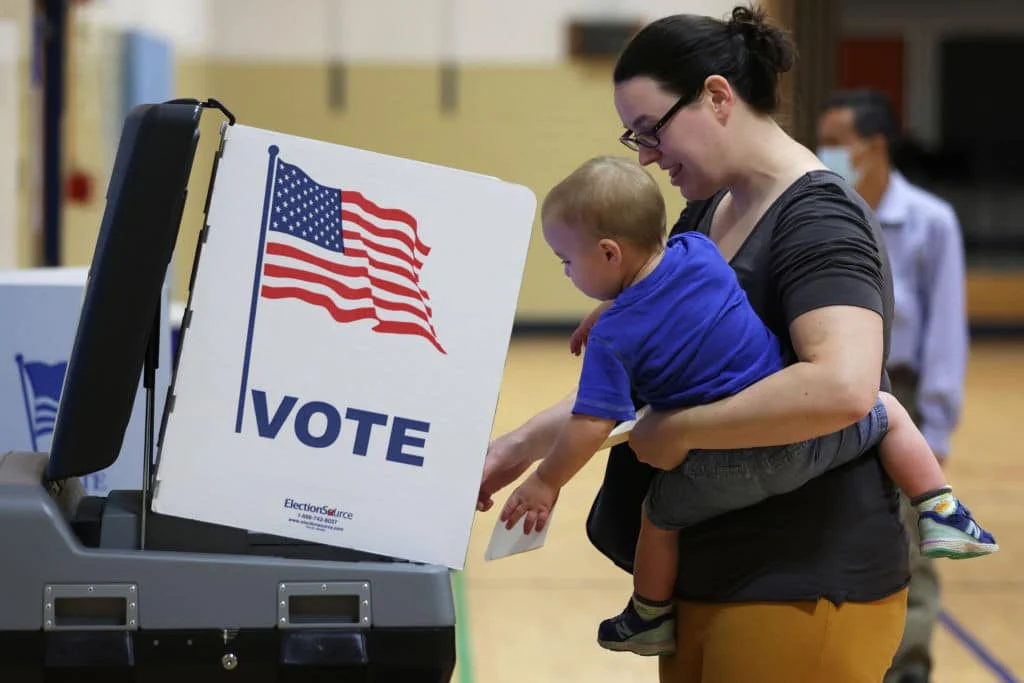
An interesting and long-lasting experience in democracy in the United States of America is ending. It will leave an indelible mark on the country. Louisiana has tried a new way to run party polls for almost 50 years. It is different from the usual way that presidential elections are run.
Louisiana has used a method different from the usual party primary system, which asks voters to pick a party. Everyone who votes, no matter what party they belong to, has the chance to choose a candidate from all those running. If neither of them can get a clear majority, there will be a runoff for those two candidates who are currently ahead.
The idea for this trial goes back more than fifty years. It has changed the political landscape not only in Louisiana but also in other parts of the country. It is very important to know that this method works best for places not part of the national government.
Recent Political Events in Louisiana
In Louisiana politics, Governor Jeff Landry, a Republican, wants to change the unique open primary system to a closed one where only party members can vote. The governor says this change is necessary to ensure that both parties are treated fairly, and he is worried that the election results for Louisiana lawmakers might not be known until December. But state lawmakers are choosing a more moderate change. They have decided to limit the open primary system for some races, like those for Congress. Notably, the open primary system will stay in place for all statewide races, even the governor.
What Other States’ Open Primaries Look Like?
Changes like the ones suggested in Louisiana have already been made in California, Washington, and other states that use variations of the open primary system. In California, for example, it is now common for two Democrats to emerge from an open primary and run for office on Election Day.
When looking at the possible effects of these changes, Christian Grose, a political science professor at the University of Southern California, says that Louisiana’s open primary system has generally helped elect less extreme lawmakers.
Grose looked at voting records in Congress and found that states with completely open primaries tend to elect more moderate members than states with closed primaries.
Even though voters might not always pick reasonable candidates, Grose says that open systems allow less extreme people to be elected, which rarely happens in closed systems.
There are different points of view. For example, some say that party leaders have given up power over the primary process, leading to more extreme candidates’ rise. The failed effort by Republican Party leaders to stop Donald Trump from running for president in 2016 is an excellent example of how a candidate can change the political party to fit their own image.
Louisiana’s politics are changing quickly, and the debate over primary systems shows how difficult it is to find a balance between party control and the chance to elect more moderate lawmakers.
As the state thinks about making changes, it’s still not clear what will happen in future elections or how the political scene will look.
Senators Defying Trump and Still Holding Office
Primary elections have increasingly embraced independent voters in various states, even in states without fully open, nonpartisan primary systems like Louisiana or California.
According to Grose, both of Louisiana’s senators belong to the Republican party. Notably, Senator Bill Cassidy, despite being a Republican, voted in favor of removing Trump from office following the January 6, 2021, insurrection. On the other hand, Senator John Kennedy did not support Trump’s removal.
It’s worth highlighting that Cassidy was among the seven Republican senators who voted to remove Trump during his second impeachment trial. Since then, three of these senators have left office, and Senator Mitt Romney of Utah has declared he won’t seek reelection. The remaining three, Cassidy, Senator Susan Collins of Maine, and Senator Lisa Murkowski of Alaska, hail from states without traditional partisan primaries.
Murkowski secured a fourth term in Alaska’s new ranked-choice voting system in 2022. This innovative system allows voters to select first, second, and even third-choice candidates. If no candidate achieves a majority, the candidate with the fewest votes is eliminated, and those votes go to the voter’s next choice.
Voters narrowly approved Alaska’s ranked-choice voting system in a 2020 ballot initiative. However, the state legislature is currently attempting to overturn it. Meanwhile, in New York, the ranked-choice voting system played a pivotal role in the election of Democrat Eric Adams as mayor.
“Cassidy was only one of seven Republican senators to vote to remove Trump from office during his second impeachment trial.”
Ranking Choices and Political Dynamics in Alaska
In a significant political development, Alaska has adopted a ranked-choice voting system, as witnessed in Senator Lisa Murkowski’s reelection in 2022. This approach, where voters prioritize multiple candidates, ensures majority support for the elected candidate.
Alaska’s ranked-choice system has not only made history by electing the first Democratic member of Congress in decades, Mary Peltola, but it has also seen bipartisan collaboration in the state. Peltola, despite her Democratic affiliation, has actively worked with Republicans.
However, it’s noteworthy that Alaska’s legislature is currently attempting to overturn the ranked-choice system, a decision that directly challenges the voters’ choice in a 2020 ballot initiative.
“That’s the same system by which Alaska elected Mary Peltola as its first Democratic member of Congress in decades (and she made history as the first Alaska Native in Congress).”
When people choose between an open system and a ranked-choice system, they always say they would choose the open system. In 2016 and 2020, this trend was clear in Maine and Alaska. Nevada voters already agreed to a ranked-choice system, but it needs to be passed again in 2024 before it can be used.
Arizona Republicans lost in 2022 because more extreme candidates won their party’s elections; the state is now thinking about putting ranked-choice voting on the ballot in 2024.
The importance of these changes goes beyond individual states. People often say that the current partisan election system in the US is to blame for rising partisanship. This trend is especially clear at the national level, where Donald Trump is strengthening his control over the Republican Party by focusing on “retribution” against opponents in case he wins the White House in 2024.
Adding the views of independent voters to the primary system has been a point of contention, as Trump’s worries in New Hampshire show. As a result of Trump’s success in the Iowa caucuses, the upcoming primary in New Hampshire is important for Nikki Haley, who is running against Trump as a Republican. Trump says that letting non-Republicans run in the primary is the same as allowing “liberals and (Joe) Biden supporters” into the Republican process. Polls show that independent voters in the state favour Haley, which probably fuels Trump’s views.
Interestingly, most Americans don’t belong to a political party, even if they lean toward one. Gallup has been keeping track of which parties people in the US belong to, and since 1991, there have been more independents than Democrats and Republicans.
Both Democrats and Republicans hit a low point in 2023 when only 27% of people gave their party a name. When asked more about it, many people who say they are independent lean toward either the Republicans or the Democrats. In 2020, 45% said they were Republicans or more likely to be Republicans, while 43% said the same about Democrats.
In the 2020 presidential election, 26% of voters said they were independent, less than the percentage of voters who said they were either Republican or Democratic. This shows how complicated political membership can be. It’s worth noting that 46% of voters in New Hampshire said they were independent.
Even in the Democratic primary, only about half of the voters said they were Democrats. A big chunk of them (45%) said they were independents. An independent from Vermont named Bernie Sanders won the Democratic primary in New Hampshire but ultimately lost the vote to Joe Biden.