
Trump’s 20-Point Gaza Peace Plan Full Proposal and Reactions
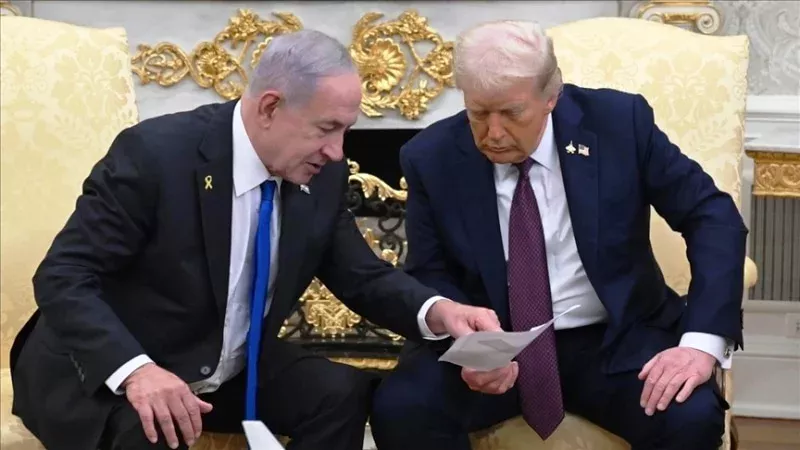
On September 29, 2025, President Donald Trump presented a 20-point roadmap to settle the Gaza conflict at a White House press conference. Israeli Prime Minister Benjamin Netanyahu agreed. This aim is outlined in a White House paper to change Gaza into a “deradicalized terror-free zone” with the aid of economic redevelopment, hostage exchanges, and the involvement of international monitors.
Calling it historic, Trump asked Hamas to sign for an immediate ceasefire. On Netanyahu’s side, he praised it as the route to peace; however, the response from Hamas is still pending, therefore, the plan’s future is unknown.
The strategy, taken from Trump’s 2020 vision and Saudi-French proposals, features security and prosperity as the main aspects, but also carries a demand for Hamas to disarm.
According to the plan, disbanding the Hamas organization is a requirement; members who choose peace and give up their arms will be given amnesty, Gaza will be made free from arms under the supervision of independent monitors, and all tunnels and weapon facilities will be destroyed. A temporary technocratic Palestinian committee, managed by a “Board of Peace” with Trump as chairman and Tony Blair as a member, would oversee reforms within the Palestinian Authority, according to the White House document.
After being released, the hostages, Israel, on its part, would step back to the negotiated limits with Washington, and an International Stabilization Force (ISF) led by the U.S. would keep watch at the border with Egypt and Jordan. Aid would also include infrastructural renovation, would be facilitated urgently under the auspices of the Red Crescent and the UN. In accordance with the agreement made in January 2025, the Rafah border remains accessible.
Attracting funding for jobs and optimism, a Trump economic plan would bring specialists together to help reconstruct Gaza. A unique economic zone with a set of negotiated tariffs favorable to trade partners would be created.
The project not only prevents population flight but also encourages residents to stay and improve their quality of life. Besides, regional allies would monitor Hamas’s adherence to the ISF training program for the Palestinian police. Israel would not occupy Gaza, handing control to the ISF progressively, retaining a security perimeter until threats are neutralized.
In 72 hours following the approval by Israel, all hostages were given back, those alive and those dead; Israel authorized the release of 1700 people from Gaza, arrested after 7 October 2023, and among them were women and children, as well as 250 inmates sentenced to life.
For each Israeli hostage set free, Israel was committed to returning fifteen deceased Gazans. Such an exchange would temporarily halt the war and ensure that the fighting ceased along the front lines until a complete withdrawal could take place.
An interfaith dialogue would promote tolerance and coexistence, changing narratives for Palestinians and Israelis. Once Gaza is redeveloped and the PA reforms are implemented, conditions could lead to Palestinian self-determination and statehood, as recognized by their aspiration. The U.S. would facilitate Israel-Palestinian talks for a political horizon of peaceful coexistence.
Netanyahu accepted the offer as feasible and promised to honor its terms to his people. Still, the Palestinian representatives only described it as a surrender, pleading for recognition of their whole freedom. In the current state of the split among the groups, Hamas’ silence leaves its position still unknown.
AJ English published on X on September 30, 2025, quoting Hamas sources as rejecting the plan as directed by Trump. Success of the plan depends on how the U.S. implements it and Hamas responds.” The proposal’s success hinges on Hamas’s response and U.S. enforcement.